“Saying no can feel scary, but it’s not that hard to do. In fact, it’s a lot harder to say yes and then change your mind because you realize you have too much on your plate. And there are so many reasons that we can give ourselves as to why we should say no:
• You don’t have time for this.
• This isn’t aligned with your values.
• You’re already committed to something else.
• Your health is not in a place where you want it to be right now.
Whatever the case may be, just say no—and don’t worry about being rude or impolite.
You do not have to justify your actions.
You are not responsible for other people’s experiences and feelings. You are not responsible for their actions or the way they interpret your actions.
You do not have to justify your decisions to anyone, especially those who are attempting to manipulate you or gaslight you into doing what they want.
It’s okay to change your mind.
It’s okay to change your mind. People will respect you for being honest and not wasting their time. You have the right to change your mind about things, and it’s not a character flaw.
It’s okay to set boundaries.
How many times have you said yes when you really wanted to say no? Do you often feel like people take advantage of your time and energy? Have you ever felt like you couldn’t say no to a person or situation because there would be dire consequences if you did so?
While saying yes is a good thing, it’s also helpful to know when to decline an invitation or offer. Simply put: it’s okay to set boundaries in relationships with friends, family members, and even partners.
When setting boundaries, think about what makes you feel uncomfortable or unsafe. Are there certain types of communication that are upsetting? Are there actions that make certain situations not worth your while? What scenarios do you want to avoid at all costs?
You may already know what pushes your buttons, but don’t worry if those answers aren’t immediately clear right now. Many people are socialized into acting without thinking about their own personal needs, so setting boundaries can be an unfamiliar practice for some folks. Maybe even for you! If this is the case for yourself, work on minimizing the number of commitments that fill up your calendar and give some thought as to how much time and energy (both physical and emotional) a given situation will require from you before accepting any invitations.
Once some boundaries have been established — however general or specific — practice saying no when circumstances call for it. Remember: if something feels wrong, then chances are that it isn’t worth doing in the first place! Additionally, by trying new things out (like saying no), we often find that our anxieties were unfounded anyway!
The only person you should try to please is yourself.
You should not care about what other people think of you.
You should not try to please other people.
The only person you should try to please is yourself.
You should focus on your own happiness.
You should not try to please other people because you can’t please everyone, and those who don’t like you won’t like it if you try to appease them, so just be yourself and do things because you want to do them.
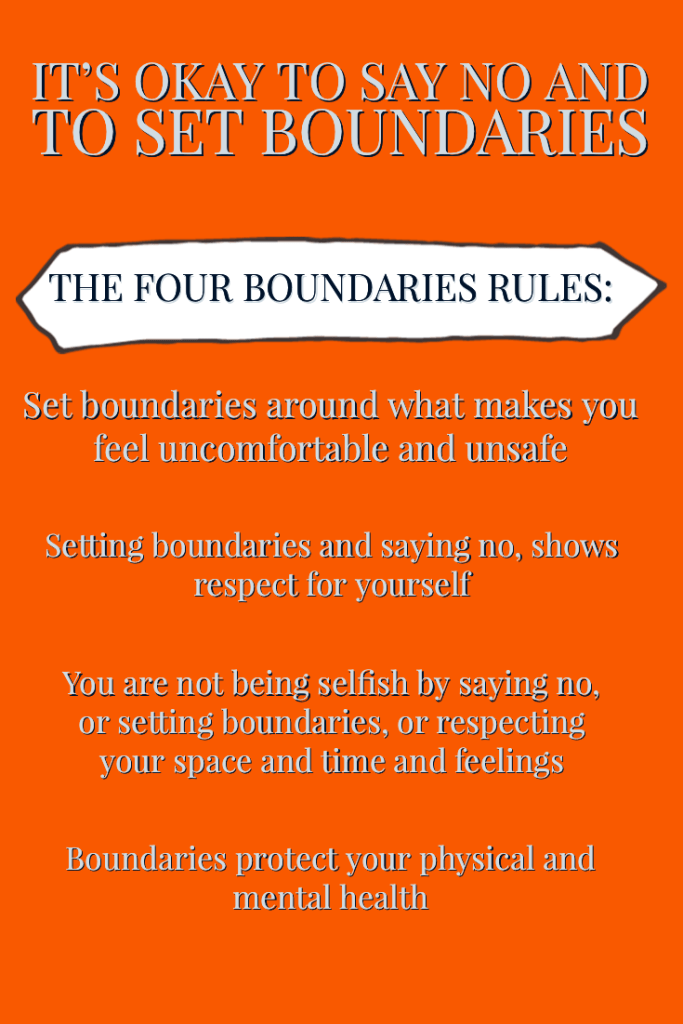
Setting boundaries and saying no, shows respect for yourself
When you send out a clear message that you respect yourself and your limits, others will learn to respect them too. It’s a win-win situation.
When you say no to what doesn’t serve you or make you feel good, you create space in your life for things that do. You create space with your loved ones by letting them know where they stand with you and then following through on it. Establishing boundaries shows people how to treat us and how we want to be treated. It also shows us what kinds of relationships are healthy for us and which ones aren’t.
Respect your space and time, even if it means disappointing others occasionally.
We live in a world where the entrepreneurial mindset is glorified, and the expectation is that we must be working, creating, and pushing for more all the time. If Netflix asks about your recent binge-watching experience, you might feel obliged to say things like “I know it’s a lot but I’m also trying to finish three books at once.” There’s an idea that if you’re not constantly busy or doing something productive with your time then you’re being lazy or uninspired.
That isn’t true—it’s natural to want some downtime every now and then. At those moments when you simply want to let your mind wander on its own accord rather than focus on a task, honor yourself by giving yourself that space. Respect your space and time, even if it means disappointing others occasionally.
When you set boundaries with people—especially if this is difficult for you—it can be intimidating as well as rewarding. You may feel anxious about saying no or disappointing someone else by setting firm boundaries but over time this will become easier because you’ll realize that protecting yourself comes first. You are not being selfish by saying no, or setting boundaries, or respecting your space and time and feelings. You are respecting yourself above all else because nobody knows what makes you happy better than… well… YOU! Sometimes it’s easy to put our feelings aside for others but don’t forget that those feelings won’t go away just because we don’t address them at the moment; they will only get stronger until they boil over into frustration and anger (at ourselves).
Saying no helps protect your mental health and physical health
Appropriate boundaries are the keys to a healthy work-life balance and self-care.
When you aren’t able to say no and set boundaries, people take advantage of you, which can lead to burnout and resentment.
Saying ‘no’ clearly communicates your availability. When you’re not available to help someone with something or attend an event or meeting, saying no is better than pretending like you don’t have time for it.
Setting boundaries means you respect yourself
It is okay to say no and set boundaries with people who are used to you just saying yes.
When we say no, we set boundaries. It is okay to set boundaries with people who are used to you just saying yes. Boundaries protect our physical and mental health.
We do not have to justify or explain our actions if we choose not to say yes. There is nothing wrong with changing your mind in the middle of something.
It is okay to be firm in your decision when you say no and it’s okay to still like someone even though you don’t want the things they want from you. The only person we should try to please is ourselves – if a task does not help us grow or make us happy then it’s okay not do it anymore.
Saying no does not make us selfish, rude or entitled, it makes us more aware of how our time and energy are being spent and where it’s being invested in our lives. We can choose wisely about where we spend our most precious resources: our time and energy.
Remember: The only way you can live a free life is if you learn how to say no. If someone makes you feel uncomfortable, it’s ok to tell them. It is important to set boundaries and say no now. It might just save your life someday.
Negativity is like cancer; it has the power to completely destroy lives and relationships. I’ve personally been in a toxic relationships and environments that resulted from negativity. The negative thinking had me convinced that the relationship would last forever, when in reality, there were multiple instances which if thought and observed properly, should’ve warned me of an impending breakdown of the partnership. This is one of the reasons why this article exists — to give you an insight on how to identify negative thinking and learn how to stop negative thinking.
Negative thinking is a habit, and it’s hard to break.
You probably already know that negative thoughts can hurt your life. They can wreak havoc on relationships and prevent you from enjoying the important things in life, like work and activities.
But most people don’t realize that negative thinking is a habit that needs to be broken. Like smoking or overusing credit cards, it becomes an automatic response you need to work hard at spotting and stopping.
Negative thoughts are often automatic and repetitive, triggered by certain situations such as when we’re anxious, depressed or stressed. People who experience negative thinking also tend to have more worry, anxiety, depression and stress compared with people who do not (Baumeister et al., 2001).
It’s possible that negative thinking may be a sign of a mental illness such as anxiety or depression.
It’s totally normal to have negative thoughts.
Many of us live in a prison of our own negative thoughts. Negative thoughts are simply unhelpful thoughts that pop into our head and seem to be true. The truth is, they’re usually not true. They are often a way of coping with painful situations or protecting ourselves from pain in the future – but we don’t have to live by them. For example, someone who has been hurt in the past might believe “I’m not worth anyone’s time” as a way to protect themselves from being hurt again.
A common misconception is that it’s weird or embarrassing if you find yourself thinking these things sometimes – but it’s totally normal! Which means you shouldn’t judge yourself for having them either.
It may feel like you’re out of control, but you are in charge of your brain. You can rewire the neural pathways of your brain with repetition.
For many people, developing positive thinking habits is a long process that can feel uncomfortable at first. It may feel like you’re forcing yourself to be positive and you may even find it difficult to imagine how an optimistic outlook will be helpful in your life. However, research shows that the brain can actually change shape over time with practice and repetition, which means you are able to rewire the neural pathways in your brain that support negative thinking.
The good news is that this means you are also able to rewire your brain and build new neural pathways that support positive thinking. As you learn to examine situations more closely and only respond with realistic thoughts, your mind will get used to focusing on all of the aspects of a situation instead of just one or two details.
Negative thoughts are often automatic and repetitive, triggered by certain situations such as when we’re anxious, depressed or stressed.
Just like any other muscle or new skill, your brain does need time to adjust. The most important thing is to stay patient as you begin working on changing your thought patterns from negative ones into positive ones.
You don’t need to feel guilty about negative thinking.
First things first: you don’t need to feel guilty about negative thinking. The majority of the time, we have no control over what pops into our head. If it’s a positive thought or a negative one, it’s just something that pops up at random—like an advertisement in the sidebar of your Instagram app.
The process of repelling these thoughts is not about judging yourself for having them, but about training yourself to let them go like any other distraction. There is no shame in having more practice than someone else at letting them pass by without hooking you into rumination and spinning out of control.
Change your environment to change your thinking.
It’s not enough to stop a thought and then sit idly by, waiting for the next one to pop up. You have to remove yourself from the environment that contributed to your negativity in the first place.
Surround yourself with positive people. Don’t let negative people who add nothing to your life be part of it. This can be hard if you don’t have a choice—like with certain family members or co-workers—but don’t obsess over them when they aren’t around.
Change your physical environment. If you work at home, go work somewhere else. If you live alone, get out of the house and visit friends or go out into nature (which is proven to improve mood). That said, I know that leaving the house isn’t always feasible if you struggle with depression, agoraphobia or other mental conditions; just try and incorporate some positive changes into your space as much as possible.
Change your virtual environment too. De-clutter your phone by removing apps and notifications that don’t serve anything positive in your life and/or annoy you constantly (looking at you Facebook). Unfollow any accounts on social media that make you feel bad about yourself (unless they belong to someone very important in real life who only uses those platforms) or spark jealousy when it comes to material possessions and so on.*Change your internal environment too.* Your brain has these two hemispheres: one controls emotion while the other is more analytical. According to psychologist ”Noah Karrasch”: “By thinking more critically about why something bothers us we can prevent our emotions from getting out of control.”
The process of repelling these thoughts is not about judging yourself for having them, but about training yourself to let them go like any other distraction.
Create reminders that help you think positively.
Life can get so overwhelming and stressful that it’s easy to forget how blessed you are. Use reminders to help you start focusing on the good things about the people, situations and things around you.
Reminders can be physical; notes taped around your house or office, or digital; apps and alerts on your phone. There are also services where you can pay to receive text messages from positive people throughout the day, such as The Daily Positive (https://thedailypositive.com/).
You could even keep a gratitude journal; write down 3-5 things every morning that you are grateful for, before heading out for work or starting your day. By acknowledging what you have now, rather than constantly stressing over what you don’t have, it helps create a foundation of positivity that can help turn your life around.
Part of breaking a habit is building a new one in its place, no matter how small.
The human brain is malleable, and gives you the power to change your negative thinking patterns. Just like a muscle, it will grow stronger as you work it out. Because neural pathways take time to form, repetition of new behaviors is essential. If a particular pathway isn’t used for a long period of time, it will eventually shrink and disappear—so don’t get discouraged if your new habits don’t take right away! To build positive thinking into your life, start small by asking yourself the following questions:
What am I grateful for?
What are three things that happened today that I am proud of?
How can I show myself more kindness today?
As you build more positive thinking into your life, you will find that negative thoughts have less and less room to influence you.
Don’t do this alone! Surround yourself with people who support you and will celebrate with you when you succeed in changing your thinking patterns.
Try to develop a network of people who can help you. If you feel comfortable talking about what’s bothering you, reach out to people who can be supportive and non-judgmental. Surround yourself with people who will celebrate your successes, who understand how hard it is to change negative thoughts and patterns. Don’t try to do this alone!
Another option is to keep writing in your journal when you’re feeling down. Getting your feelings into words can be powerful. You may even want to write letters that you don’t send—as a way of expressing the things that are on your mind and in your heart. It could also help to focus on the people in your life who love you, whether they are family, friends, or romantic partners (or all three). Reminding yourself that others love and care for you can sometimes make a big difference when it feels like life has gotten overwhelming.
We all have negative thoughts, but by learning how to control your negative thinking , you can improve your life.
Finally, try to be aware of the messages we get from others. While most of us aren’t lucky enough to have personal cheerleaders around at all times, there are some steps we can take when it comes time for self-motivation or reassurance: try not listening to negative media messages; refrain from watching programs or videos that make you feel bad; avoid reading magazines if they tend give rise to self-criticism; limit interactions with anyone who tends towards negativity or drama; don’t hang around anyone who makes negative comments about themselves or others (it could make it easier for those voices inside yourself get louder); spend more time with positive media messages and people (this includes online)—the ones that focus on good news stories, overcoming challenges, inspirational success stories
It is possible to change your negative thinking patterns, but it takes time and commitment
There’s no quick fix when it comes to changing how you think, but it’s a challenge worth tackling.
Just like with any therapy, medication, or self-help tool that you can use to improve your mental health, you will probably experience setbacks along the way. In fact, it’s completely normal to feel frustrated at times. You may find yourself wanting to give up altogether because you’re worked so hard and yet still feel stuck in the same negative thinking patterns.
For those of us who are prone to negativity, it is particularly important that we work on our negative self-talk by reminding ourselves that setbacks are natural and part of the process of growth. Recognizing them for what they are is key. If we become too discouraged by these setbacks—by telling ourselves “I’ve tried everything!”—we could get stuck in a rut where we just focus on our failures rather than on all of the ways our efforts have helped us grow stronger.
A crucial step toward learning how to control negative thoughts is seeking support from others when things get really tough or if you’re feeling stuck in one particular spot on your journey towards greater happiness through self-compassionate living.”
You’ve stopped trying to control the uncontrollable and have accepted that things have to be the way they are. But you’re still not completely happy with your life, right? Of course, there will always be some things you’ll worry about. Everybody worries. Sometimes, it’s a good thing. For example, when you’re waiting for your significant other to get home and you’re afraid they might have gotten into an accident. But most of the time, we end up worrying about things in our lives that we can’t change anyway. What if I won the lottery? What if I lost my job? What if my house burned down? This post is going to give you 5 suggestions on how you can stop worrying about things you can’t change.
1. Know you’re in control of your mind.
One of the most important things to understand is that you are in control of your mental state. Even if things are going wrong left and right, if you’re having trouble making money, if you’re feeling lonely or depressed, it’s not the situation itself that makes you feel this way. It’s your thoughts about the situation.
No matter how bad things seem, no matter how much negativity and stress you face at work or at home, there is always something that can be done — even if it’s simply changing your attitude toward the problem. Once you realize this, it becomes easier to dismiss pointless worries and to focus on the task at hand.
Mantras are powerful, short phrases that help you refocus your thoughts back to the present moment. At the start of each day, choose a phrase to repeat if you find yourself dwelling on something in the past or future. It can be as simple as “I am more than enough,” or it can be more detailed and specific to your situation. For example, if you worry a lot about what other people think of you, your mantra could be: “My entire life is not made up of what one person thinks of me.” Repeat this over and over again when you are worried — even out loud if no one is around. The goal is to bring your attention back to this moment in time and away from what might happen down the road or what was said last week.
3. Remember to breathe.
The next time you feel yourself spiraling into a worrisome state, take a moment to focus on your breath. Taking deep breaths through the nose will reinvigorate your body and calm your mind. Inhale for three seconds, hold it for one second, then exhale through your mouth for two seconds. Repeat this process as many times as you need until you feel tension release from your body.
You should also consider breathing through the nose over the mouth in order to take advantage of the filtering properties of the nostrils and nose hairs, which help keep out dust and other potential irritants that can cause lung inflammation. Breathing with oxygenated air is one of life’s most underappreciated pleasures, so make sure to properly enjoy it!
The world is a complicated place, and it can be easy to get caught up in the worries of the day. We’re constantly on a quest to better ourselves, but sometimes we forget to look at where all of our efforts are going. The most important thing you can do is recognize when you are worrying about the things that are out of your control—whether it’s something like climate change or weight gain or having an unfulfilling job—and stop yourself before you can get too overwhelmed by it.
Taking time for yourself is one way you can do this. It allows you to have a collection of positive thoughts that help keep life from getting too hectic. And if even that doesn’t work, there’s still always meditation.
5. Try becoming the smartest person in the room.
In many cases, worrying is a way of avoiding a problem by focusing on the consequences instead of the cause. But if you were to really dig into what you’re worrying about and learn more, you might find that there’s not as much to worry about, or even that you have more control over the situation than you realized.
To illustrate this idea, let’s say that your friends are going out to dinner and discussing their favorite TV shows. You haven’t watched any of these shows because they mostly all sound boring, but your friends seem passionate about them so maybe you should give them a try? In this scenario, what matters isn’t whether or not these shows are actually good—it’s how much they interest your friends and how much they excite them when they talk about them. You don’t need to share their passion in order to feel comfortable participating in discussions with them (again: it’s just TV). Instead, do some research before your next outing so that you can join the conversation with something of value (even if it’s just an observation). In other words: become the smartest person in the room about something!
Worrying does nothing but make you feel awful, so it’s best to find ways to stop doing it as soon as possible.
Worrying does nothing but make you feel awful, so it’s best to find ways to stop doing it as soon as possible. To do this, you first have to understand the difference between anxiety and worry. While anxiety is a mental health condition that involves a constant feeling of worry and fear that is often completely out of proportion to the situation at hand, worrying is something we all do from time to time. Worrying tends to be a bad habit that needs breaking.
The more we worry, the more worried we get—so it’s not a good idea to worry about what’s going to happen in the future, especially if there’s nothing you can do about it right now.
The general sentiment is that we often think about negative things that could happen to us, but that we can’t change. We might think about all the ways in which we are imperfect, or the changes we want to make in life but can’t make right now. We know that everyone worries, and we acknowledge that worry is part of human nature. However, we also offer practical ways to combat worry and have a more positive state of mind. To be honest, there are many other things that I could’ve talked about here. So perhaps it’s most helpful to list what we didn’t include. These suggestions aren’t ranked in any way, and they aren’t in any order. What they are is five things that you can do to alleviate your worries — without taking under consideration those things we can’t change, or worrying about the past. So tell me, how do you stop worrying about things you can’t change?
There are successful people who are both extremely lucky and extremely hardworking, and others who are extremely hardworking but very unlucky. The only things you’ll find here are hard work and this message: “you need luck”.
Photo by Miguel u00c1. Padriu00f1u00e1n on Pexels.com
What factors determine success?
Success. What is it? How do we define it? And what factors determine success?
Success is a complex topic and the definition of success varies from person to person. However, there are many factors that can determine if you’ll be successful at something or not. Some of these factors include luck, hard work, internal and external influences.
You could argue that luck is what determines success but I’d say that hard work plays a big role in being successful as well. It’s also important to mention internal and external influences because they can affect how well you perform on something (e.g., an experiment). The combination of these four different factors makes it difficult for any single formula for success to be created.
How much of success is due to luck?
It’s easy to say that luck played no role in your success. It’s a different story, however, if you don’t succeed. Then it’s easy to blame bad luck or lack of opportunity.
You may get lucky and stumble into a great opportunity. When you’re lucky, it may seem like hard work was all that was required—but then again, people who are good at their job get more opportunities than those who aren’t as good at their job. Luck plays a role in this because not everyone is equally talented or has equal resources (supposedly meritocratic societies tend to be particularly unfair).
Luck can play an even greater role in startup success: 10 percent of the most successful startups were founded by immigrants to America, for example; other research suggests 20 percent of successful entrepreneurs had immigrant parents. The American Dream is based on the idea of free access to opportunity—but some people have much better access than others.
Hard work is a necessary, but insufficient, condition for success. If you want to be successful in the future, you have to put the work in now. However, hard work alone will not guarantee your success. There are lots of people who work very hard and never achieve their goals. But if you don’t put in the work and effort needed to achieve your goals, you’re definitely not going to reach them.
To succeed, you have to choose to do the hard things—the things that other people aren’t willing do or would rather avoid altogether—on a daily basis: wake up earlier than anyone else; stay at the office after everyone else has gone home; spend more time studying than everyone else does; etc. Successful people understand that consistent effort over long periods of time is required for significant results. To become successful at something, you need patience and perseverance: both of which are made easier when driven by passion.
What determines how people succeed in life?
The problem with the debate over whether success is more dependent on luck or hard work is that it’s usually framed as an either-or question—and the answer is rarely that straightforward. In reality, the ways in which people become successful are different for each individual, and can involve a combination of both luck and determination.
The first important characteristic to consider when thinking about people who have succeeded in life is how much they did to improve their own circumstances. Lots of people achieve success because they take steps toward realizing their goals; this doesn’t always mean working grueling hours at a job for years on end. Where you start out in life can certainly impact how far you’ll be able to go, but if someone has a strong sense of where they want to go and what they want to do, they’ll likely find a way to get there.Maybe most importantly: if you have an idea, no matter how big or small, it’s critical that you know how to execute it effectively in order for your idea to gain traction and make an impact on others’ lives.”
How do you measure how lucky, or unlucky, you are?
How do you measure how lucky, or unlucky, you are? While there are a million ways to measure luck, it’s important to first understand what luck means in your life. Some people define luck as being in the right place at the right time — like winning the lottery or meeting your soulmate at a party. To others, it might mean having loving friends and family members. Because each person has their own definition of what makes them lucky, it can be hard to make blanket statements about how much of our success is due to good fortune.
If luck is defined as being in the right place at the right time, then it’s possible that someone who seems really lucky may simply have better instincts than most people! However, if we judge our level of luck by how many positive things happen in our lives (winning awards for work well done), that’s a more objective way to approach this question.
Taken together with other factors —such as how hard we’ve worked—luck can be seen as part of a larger constellation of things that contribute to our success
Does luck matter more or less for some groups than for others?
We consider the luck factor in a person’s success. While talent and hard work play their parts, what about luck? Does it matter more or less for some groups than for others?
Luck is not random. It is determined by the relationship between the individual and the world around them—the chances they have to develop their talents, opportunities to prove themselves, people who can help them succeed, circumstances that allow them to thrive, and so on. This relationship has always been unequal. People in lower social positions are less lucky than those above them; people with wealth are more lucky than those without it; men are generally luckier than women; white people are generally luckier than non-white people; rich kids have more luck than poor kids. These inequalities increase over time due to how we pass our advantages down from generation to generation: through inheritance, university networks and connections into powerful institutions like governments and business corporations.
Is there a relationship between luck and hard work?
The relationship between luck and hard work is complex, but there are a few important things to remember:
Hard work makes you more likely to be lucky. When you put in the effort, it’s easier for you to notice opportunities when they appear. Plus, your skills and knowledge improve if you continue working hard. If you’re prepared for an opportunity, you’re more likely to successfully take advantage of it when it comes along.
Hard work does not guarantee luck and luck without hard work is unlikely.
Hard work does not guarantee luck. Even if you’re very prepared and extremely observant, there’s no guarantee that good luck will happen for you at any given time. It’s possible that working hard can increase your chances of getting lucky in the future, but there are no guarantees in life—especially when it comes to success and failure.
Luck without hard work is unlikely. The combination of skill and chance may lead some people to succeed without putting in a lot of effort first (although there is some debate about whether or not they actually did put in a lot of effort), but most people who become successful do so through a combination of talent and hard work (and maybe even an element of luck). Regardless, those who have worked very hard are much more likely than others to end up with great opportunities as a result.
Does being successful make some people luckier than others?
For those who feel that luck is the only reason for their success, such a mindset can keep them from progressing. They may think, “I just got lucky this time. I’ll never be able to do this again.” This thought process can cause them to have self-doubts and work less hard on future projects or endeavors, which in turn can potentially lead to failure. It’s important for successful people to understand that although luck may have been a part of their achievement, it was also hard work and determination that helped them succeed. In other words: don’t get too big for your britches!
Do we oversimplify the story of success when we say “hard work leads to success”?
It is a simple equation: Hard work leads to success. When we say someone is successful, the assumption is that they put in the hours and earned their place in the hierarchy. But many people who are considered “successful” reach that point by other means—they have high-powered connections, good looks or exceptional luck.
So when we say hard work leads to success, do we oversimplify the story of success? Do we imply that anyone can be successful? Are we teaching our children that if they just work hard enough, they will be rewarded?
Let’s look at what people really mean when they say hard work leads to success. It’s not just about how hard you work; it’s about how effectively you work and what you do with your time and energy. When people think of hard workers, they picture someone who puts in many hours at their job or project—they don’t always picture someone who works smartly or effectively.
Success isn’t determined by any single factor, but rather by how the individual relates to and interacts with the world around them.
Your success is determined not by any single factor, but by how you relate to and interact with the world around you. For example, if someone has big dreams but no perseverance, they will not achieve their goals; likewise, if a person has perseverance but no big dreams, they will also fail. Successful people have both: the passion to create a better world for themselves and for those around them; and the resolve to pursue those goals without hesitation.
In order to be considered successful in today’s society, you must work hard and be lucky. You need both qualities together because one without the other is useless: hard work alone cannot produce results unless there is an outside force helping it along—luck being that force—whereas luck alone cannot produce anything unless there is someone taking advantage of its presence. A lucky person who does not put in any effort will never make full use of their good fortune; likewise, someone who works hard but never receives any external support would soon give up on their goals because they wouldn’t believe that it was possible for them ever to succeed at anything else in life. The best way to achieve success is through combination: work very hard while hoping that fate smiles upon your endeavors so as not achieve results faster than expected time frames should permit (or even sooner). If either one of these factors are missing from our lives then we are doomed from achieving whatever goal(s) might lay ahead because without both qualities working side by side then nothing can happen quickly enough before us giving up hope altogether.
Have you ever stood around a campfire trying to make small talk with people you have just met, not knowing what else to say? If so, you might have found yourself struggling to think of topics of conversation and ways to be more interesting. Well this video is for you. Here I will give you helpful tips on how to think more interestingly and make more friends.
Being vulnerable doesn’t mean telling strangers you see on the street your deepest, darkest secrets. But it can mean opening up to someone or a group of people you trust, or at least letting them get to know you better than most people do.
Ask for help when you need it. There’s nothing wrong with admitting that something is hard for you and that you need help if you want to improve at it. It may feel embarrassing, but I guarantee that the person who’s helping will respect that level of honesty and be happy to assist in your journey towards improvement.
Admit when you don’t know something. Nobody knows everything! Pretending otherwise just makes one look like they’re an ego-driven blowhard who has nothing interesting to say because they’re too busy talking about how awesome they are (to make up for their insecurities). Even if someone is wrong, even if what they’re saying is laughably stupid—it’s still worth listening and engaging with them as a human being rather than just dismissing them outright because their thoughts differ from yours in some way; treating others with respect creates strong bonds with those around us, giving us a sense of support and community we might not have had otherwise.
Be open about your feelings. If something bothers or frustrates me, I’ll talk about my frustrations rather than keep them bottled up inside until I explode from all the pressure building within me—I’m sure many others can relate! Being honest about how we feel isn’t always easy (especially if there’s shame attached), but sharing our emotions helps us connect substantively on an emotional level instead of just having shallow conversations where we pretend everything is great all the time.”
Cultivate your passions.
We all have our passions in life, whether we’re aware of them or not. They can refer to interests, hobbies, loves and even careers. If you don’t take the time to cultivate your passions, you could be missing out on some of the most interesting things about yourself.
It’s good to know what your passions are because it gives you a more solid sense of self-worth and identity. Plus, when someone is aware of their own interests and takes steps to make them a part of their life, they become intrinsically more interesting.
For example: if you are passionate about cooking but haven’t experimented much in the kitchen yet (perhaps because you’ve been busy with other things), think about looking into that passion more by taking classes at a nearby cooking school or signing up for a community food prep class that’s offered by your local church or charity organization.
Once someone starts exploring their passions—whether through work or play—they’ll find they have more energy, creativity and joy than ever before! This will make them an even more interesting person to be around because others will notice these qualities radiating off him/her too!
Create some mysteries.
More than anything, this is what turns people into bores: they tell you everything. They’re an open book. It’s like they’ve internalized the need to be a transparent and open person, so any time they meet someone new, they just lay it all out on the table. They share their life story in five minutes and then spend the rest of their time talking about something that happened to them on Facebook earlier that day.
People don’t want to listen to a biography every time you meet them for coffee. And even if it was interesting, only hearing about your life would quickly get boring because there wouldn’t be much mystery or suspense—or even room for discussion—left over from all the details you shared up front.
Instead, keep some things close to your chest and let other people wonder what you’re thinking about or what’s going on in your life outside of that conversation. Share facts without sharing personal details or emotions behind those facts, as these are best left for close friendships when trust is established (and even then, personal details are best kept private unless it’s necessary to share).
Don’t tell me everything about yourself and don’t ask me everything about myself right off the bat; instead we’ll both feel more comfortable with each other if we can develop some relationship together before taking our clothes off emotionally speaking, so why not talk instead about music or books or sports or whatever else we like without trying to learn anything too deep?
Try new things.
The best way to avoid turning into a boring person is to try new things. For instance, you could become an avid rock-climber and join the local rock climbing community. You could enter a chili cook off and compete against other chili chefs while expanding your cooking expertise. Or, you could be like me and take up embroidery, which has undoubtedly made me more interesting at parties.
When I got my first embroidery kit, I was skeptical of whether it would even be fun—I had never done needlepoint before and wasn’t sure what I’d make out of it. Well, let me tell you: people love hearing about my embroidery projects! At cocktail gatherings hosted by my friends—the kind where everyone stands in the kitchen with drinks in hand—my conversations about cross-stitch usually draw quite a crowd. It’s true what they say: if you do something when no one else does it, you’ll always have something new to talk about at parties.
Think about what you’re most curious about, and make it a point to learn about those things.
You don’t have to be the first woman president of China to have interesting things to say. You just have to care about stuff, and be willing to learn more about it on a regular basis. So think about what you’re most curious about, and make it a point to learn about those things. This is one of the best ways of being interesting, so you should try it!
Think about what makes you interesting. If you don’t know what it is, ask someone close to you to tell you.
When we were younger, we thought that being interesting was one of those things that would come naturally to us: just like reading quickly or memorizing a lot of facts, we believed that the world would instantly become more interesting once we did. But as time passed, it became clear to me just how hard it is to be interesting.
My husband and I always try our best to be interesting—we don’t want people to think we are boring or any less than anyone else—but sometimes there are just times when you can’t be interesting. For example, there’s no way for me to be as interested in what you’re saying as you are in what I’m saying (sorry!), and so when you are telling a story about something you did with your friends last weekend and I happen to tell the same story with minor details slightly different from yours, it makes for a really awkward dinner party conversation because everyone can tell what happened.
But if you take into consideration everything that makes someone unique—what they like, their interests and passions—and then use this knowledge in order to make yourself more interesting, well then maybe one day people will start thinking differently about who is actually the most fascinating person at the dinner table.
Make eye contact, and try to talk to people with your eyes as well as your mouth.
It is often said that the eyes are “the windows to the soul,” and indeed, many people can read your intentions and mood by looking in your eyes. But it isn’t enough to look someone in the eye when you are talking—you also have to look at them as you listen intently. In fact, most people will find you more interesting if you use your eyes as an instrument of communication, and not just a passive sensor for light. Use your eyes to show emotion and interest, but avoid staring or winking (in most contexts).
For example: When someone is telling you a funny story, try making eye contact with them while they tell it and laughing when there’s something to laugh at. When someone says something surprising or unexpected, widen your eyes in surprise. Nod sympathetically as they share their problems or concerns. As you get used to this technique, play around with how much feeling you let show in your face—but beware of overdoing it! Too much animation can make a person seem wild-eyed or insincere; know the difference between enthusiasm and desperation.
Learn from other interesting people. Pay attention when someone makes you think, “Wow, I want to know more about them.” What’s the quality that draws you in? How can you be more like that?
If you want to become more interesting, start by studying other people who are interesting.
Have you ever met someone and thought, “Wow! I want to know more about them”? What was it that made them so compelling? Maybe they were curious about the world around them. Maybe they had a passion for a certain subject. They might have had an adventurous spirit and been willing to try new things or go on crazy journeys. Perhaps they had a subtle air of mystery that made you wonder what else there was to know about them. Or maybe they just made you laugh at their funny jokes and entertaining stories.
To be truly interesting, you need to possess some quality that makes other people want to know more about you. The next time you meet an interesting person, see what qualities draw you in and ask yourself how can I be like this?
Ask lots of questions.
All you need to do is ask questions. People love to talk about themselves. Start by asking them about their childhood, and how they got into whatever they’re doing now. Ask them what they like most about their job or school. Ask them what they do in their free time, and why. Once you start getting good at this, you’ll see that every person has a story worth telling, and there are always more questions to ask. If a conversation ever starts to dry up, just remember that everyone’s favorite subject is still themselves: no matter who you’re talking to, it’s okay (and even recommended) to be shamelessly self-centered sometimes!
When it comes to knowing the right person, being in a certain place at the right time, and meeting the right people to help you get there—it’s all about networking. But what does that really mean? It’s not just about meeting as many people as you can and hoping something comes of it; instead, it involves building strong relationships with others within your field and interest areas. These connections can serve as more than just potential job opportunities or social circles; they also expand your knowledge base, allowing you to learn from others’ experiences and perspectives.
For successful networking, be sure to:
Avoid broad networks like LinkedIn if possible. Instead, try joining professional organizations related to your industry or interests. This will allow you to connect with individuals who have similar interests and backgrounds—making for a much more productive relationship when compared to connecting with someone who may not be interested in or familiar with your niche area of expertise.
Seek out resources such as industry events that cater specifically towards specific industries or interests (like conferences). There are hundreds of these events happening each year across North America alone! Attendees range from well-known CEOs down through ambitious young professionals looking for their next big break—all eager to forge meaningful connections in their respective fields. And while many of these meetings take place annually (or biannually), smaller groups often meet monthly too!
Think long-term when choosing an organization for membership – whether it’s one that specializes in developing new products or services within an existing company structure… or those focused solely on helping women connect professionally outside their normal corporate roles–there’s always something exciting going on somewhere! It might even spark some ideas about how companies could work together better going forward too!
Pick a few people whose company you enjoy, and focus on spending time with them so they get to know the real you better than anyone else does.
You can’t be interesting to everyone, so don’t try. Instead, pick a few people whose company you enjoy and focus on spending time with them so they get to know the real you better than anyone else does.
For example, if your current three best friends are Paul, Ana and Jens, then the next time you meet one for coffee or lunch or dinner or what have you (other suggestions welcome), make sure it’s not some superficial hangout where you just talk about work and the weather and other trivialities. You want to get beyond surface level stuff with these people! Don’t be afraid to show them how weird you really are; chances are they will feel more comfortable sharing their own quirks once they see that it’s safe to do so. Make eye contact when telling stories (but not too much). And always—always!—offer honest opinions on things like food choices (unless someone might take offense).
No matter what happens though, don’t worry if they think your plans sound crazy! They’ll probably warm up after getting used to whatever new idea is being thrown out there by someone in authority mode at work who wants everyone else around her/him/them-self.
If all else fails though AND THEY DO SOMETIMES!, try being more interesting by talking less about yourself–or perhaps even keeping quiet altogether–and instead asking questions of those around me: “What did YOU eat for breakfast this morning?” is always an excellent opener for conversation…
Be interested in everything around you, not just yourself. Look for opportunities to be helpful and kind.
Be interested in other people. Being interested in other people means being at least slightly curious about most things, because everyone has a story. Most of us are not able to tell the difference between a person who is truly interested in what we’re saying and someone who’s just waiting for their next chance to talk. We’re all human; and so, we appreciate being listened to, even if it’s by someone we don’t know very well.
The most interesting people are often those who are curious about the lives of others.
Be interested in their stories. Everyone has lived through something interesting—it doesn’t have to be as dramatic as a near-death experience or having had an affair with the prime minister of Canada. Even the most ordinary lives have extraordinary moments. Ask someone what they think is interesting about their own life, no matter how long they’ve lived or how “ordinary” they feel they are.
Be interested in their thoughts. The thoughts of others make up most of their personalities and determine how they interact with the world around them; why wouldn’t you want to learn more about that? Instead of asking questions like “what do you mean?” or “are you serious?”, engage people by asking more open-ended questions like “tell me more about that” or “what made you say that?”
Be interested in their feelings—about themselves and about everything else under the sun! It may seem strange at first, but emotions are the glue which binds friendships together, so it makes sense to pay attention when someone shares theirs with you! I can promise from experience that your life will be much richer (and more fun) if you take time out every now again just to listen as others speak candidly on matters close to their hearts: whether those topics concern family ties, romantic relationships or political controversies… these conversations can teach us something new every single day!
The more open you are with others, the more opportunities you will have to grow into an interesting person
The most interesting people are often those who are curious about the lives of others. When you go into a conversation with someone else, try to be as selfless as possible. Instead of thinking about how you can get something out of that person or what you can tell them to make yourself seem more interesting, focus on understanding their point of view and connecting with their personal experiences.
In order to listen mindfully, it’s important that you don’t decide in your own mind what they have to say before they even open their mouth. If you’re thinking about what you want to say next or editing every sentence they say in your head while they’re saying it, you’re not really listening—you’re waiting for your turn. So instead, try to put yourself in the other party’s shoes and resist the temptation that we all feel from time to time (or all the time) to interrupt and talk over others when we think we know where the conversation is going. If each party waits patiently for their turn, everyone will have a chance to express themselves fully without being talked at.
Making other people feel heard is one of the best ways for them (and by extension, also you) to feel understood and known, which is essential for feeling close and connected—and being interested in each other!
“Be nice. Always be nice. Be the nicest person you know.” You hear these pieces of advice over and over in your life, particularly for girls because they are raised to be nice: to be polite and to not offend or hurt anyone’s feelings. But is this always a good thing? If someone is being mean to you, should you let them get away with it? Don’t be a pushover, it’s time to stand up for yourself…
You don’t have to be nice all the time.
You don’t have to be nice all the time. Being nice is a choice. You can choose when you want to be nice, and to whom. It’s possible that you’re too nice and are seen as a doormat rather than a person with your own thoughts, ideas, and feelings.
Being nice is not the same as being a doormat; there is nothing wrong with standing up for yourself and saying no even if it might make someone angry or upset with you. If another person takes advantage of your niceness, stop being so nice to them. You will feel better about yourself, more confident in yourself, and less taken advantage of by others if you start saying no when you want to say no instead of always saying yes when people ask favors.
If this sounds like something that might be difficult for you at first, then make it easier on yourself: try writing down things that other people have asked of you that made you uncomfortable or annoyed but said yes to anyway just because they asked (this includes doing things without being asked!). Then next time someone asks one of those things of you (or they ask anything else), say no!
Being nice is not the same as being polite.
Being polite is not the same as being nice. Being polite is being mindful of the feelings and wishes of others. Being nice, on the other hand, can mean sacrificing your own well-being to avoid hurting someone else’s feelings. Who wants to be a doormat for anyone? So be mindful of the difference between the two concepts.
Being polite means using well-mannered language when you address people (yes, rather than duh). It also means offering help when you see an elderly person struggling with their shopping bags, or letting someone go ahead of you in line at the supermarket. Polite actions can convey positive emotions like respect and consideration; they’re simply a way to remain calm and respectful when interacting with others in potentially stressful situations.
However, there are cases where it’s important not to be nice—and that’s where rudeness comes in handy. If someone is harassing you or harming your reputation without cause, rudeness can make them get out of your face and leave you alone. It could even save your life if it prevents violent people from attempting to take advantage of your politeness.
Being a ‘doormat’ is not being nice.
I have a friend who is absolutely incredible. He’s always so nice to everyone—even people who don’t deserve it. This is what makes him so wonderful, but it also hurts him in the long run because everyone he does nice things for winds up taking advantage of him.
I want to be like my friend, but I’m not sure how to avoid being taken advantage of (and he’s been taking advantage of me for long enough that I should just start being honest). So I decided to write this blog post and share my secret with you all: don’t be nice all the time!
We’ve all seen doormats in our lives—people who will do anything for anyone, even if it hurts them later on. And these doormats aren’t just some obnoxious jerk; they’re actually good people. Good people can really make things difficult for themselves by being too overly-nice, and you can see how much better off they are when they’re not being nice at all times. It makes sense if you look at it from an economic standpoint: when there’s nothing but kindness in a relationship, one person usually benefits more than the other partner does—not that one partner is ever truly exploiting the other one, but rather that a relationship based on constant kindness has no winners or losers in particular anymore. However, this doesn’t mean we should always be kind and never say anything negative about someone else (just like saying something negative doesn’t mean we should say something positive all the time).
So what’s wrong with being nice? Being too nice is probably one of the biggest reasons why relationships go south in general (especially for those who desire longevity). While people may think that their partners are sacrificing their needs by putting so much effort into pleasing them (and eventually realize it was never about pleasing them at all), others treat constant kindness as a chore and thus stop expressing their true feelings altogether—a real Catch-22 situation! That’s why when someone pushes us over
Being nice is not the same as being kind.
Being nice is not the same as being kind.
Being nice means maintaining civility. Being kind means having compassion.
Being nice means that you are polite, friendly, and considerate of others. Being kind means that you show empathy towards people and strive to make a positive impact on their lives.
Nice is about manners and about being good to people. Kindness is about being compassionate and helpful. Nice may mean that you keep your mouth shut when it would be socially acceptable for you to speak up; kindness may mean that you say what needs to be said, even if it isn’t always easy or pleasant to hear. Nice may mean walking away from someone who needs help; kindness may mean going out of your way to help them in whatever way they need it most at the time. People can use niceness as a social construct—as in “behave yourself or else” behavior modification—but kindness is a personal choice that you make as an individual through your own authentic sense of empathy, concern, and goodwill towards others (or simply by recognizing when others need something without having any qualms with helping them).
There are bad people out there and it’s okay to hate them sometimes.
I used to have a hard time hating people. I wanted to believe that everyone was inherently good and the bad things they did were a result of their circumstances. But that’s not always true.
A few years ago, I visited a man who had been convicted of committing horrible crimes against women. Before meeting him, I worried I wouldn’t be able to see past his crimes and understand where he came from long enough to truly empathize with him. But after spending time with him, my gut reaction changed: He was clearly intelligent and well-read, but he also lacked empathy for his victims and the gravity of his wrongdoing.
It’s easy (and completely valid) for us to feel hatred for people who do bad things like this man did; in fact, it may be unreasonable not to feel hate toward them sometimes. He wasn’t born a monster—there were events in his past that led him on the path he took—but we should still take responsibility for creating an environment that allows these kinds of dangerous people access to our society with little consequence or repercussions.
When someone does something evil, we all want answers about why they did it and how we can prevent future acts of violence or terror from happening again. We need answers so that we can get back to our lives without the constant fear of something happening again. But sometimes there are no answers because some people are bad at their core, regardless of whether their actions are justified by their upbringing or environment.
It’s okay to say no and to set boundaries for others. If you don’t set boundaries for other people, they will assume you will always do what they ask of you.
People who are nice all the time become “people pleasers.” People pleasing is a performance; it is not authentic behavior.
It’s okay to get angry sometimes, especially if it motivates you in your life goals.
One of the most detrimental mindsets to have is the idea that anger is a bad thing. Anger has been given a bad rep for being an emotion that should never be felt and should always be controlled. This causes many people to suppress their anger, which can lead to anxiety and depression. In many cases, anger is a necessary and life-saving emotion as it can motivate you to change your situation.
There’s nothing wrong with being angry
There’s nothing wrong with being angry if you feel like someone or something in your life isn’t treating you fairly. Just because you’re being treated unfairly doesn’t mean it’s okay for you to overreact. However, it does give you the right to be upset and make whatever changes are necessary in order to improve your quality of life.
A good way to use your anger is by channeling it into motivation instead of letting it rot inside of you until it manifests into something much more serious such as illness or violence. For example, maybe there was an incident where a woman was catcalled while walking down the street in New York City by several men who were hanging out on their stoop as she passed by them. The woman could have gotten angry at these men for making her feel uncomfortable but instead decided not to let her emotions get the best of her so she continued walking without saying anything back or giving any attention towards them at all.
You don’t owe anybody anything, except for respect and courtesy.
Nobody owes you anything.
You don’t owe them anything, either.
Those are the most important things to remember if you’re going to stop being nice all the time.
Everybody deserves respect and courtesy as human beings, but beyond that, they aren’t owed any of your time or energy. If a neighbor asks for help moving furniture, you’re not obligated to say yes just because it’s your neighbor asking. If a coworker proposes working overtime for free, you’re not obligated to do it just because it’s your coworker making the suggestion. You’re under no obligation to fork over money or favors unless you want to; nobody has any claim on those things from you unless you’ve promised them already.
This might sound harsh, but sometimes we need a little harshness in our lives—especially when we’ve been feeling exhausted from spreading ourselves so thin by being too kind for too long.
There are days when you need to support yourself before anybody else, and that’s okay.
The truth is that you can’t pour from an empty cup. In other words, if you aren’t taking care of yourself first and foremost, how do you expect to take care of others? When we don’t allow ourselves to recharge, the chances are high that we’ll eventually become resentful and angry, which only hurts everyone involved in the long run.
Contrary to what you may believe, this is not selfishness. It’s simply being responsible and honoring your needs before anyone else’s. By regularly filling our own tank with a little self-care every day, we increase our capacity for joy and happiness so that there will be enough left over to share with others when called upon.
You can decide when and where you are going to be nice, but it’s important to still be polite.
Stop being nice all the time. It’s okay to not be nice sometimes. Being polite is not the same as being nice. You can decide when and where you are going to be nice, but it’s important to still be polite.
Of course, there are times when it’s just not necessary to make small talk with a stranger or answer an annoying question from someone close to you, but don’t forget about basic civility and courtesy. If you’re in line at a coffee shop and the cashier has taken care of the person before you and is now asking for your order, please don’t stare at your phone or pretend that you didn’t hear them, just say “Sorry, I’ll have a large black coffee” or something similar!
Should your career be based on passion or duty? I know you want to do what you love but you also may also owe it to yourself to pay off those student loans. It is a question we all must face at some point in our lives. But how do you make this tough decision? When questioning whether or not you should pursue a career based on passion or duty, you are bombarded by emotions and feelings. While everyone is different there are steps to follow that will help you work towards achieving your goal of finding a career with passion or duty.
Passion.
If you find yourself asking whether your career should be based on passion or duty, then you’re probably starting out in life. The good news is that you have a lot of options available to you at this stage. If you’re already firmly established in a career that’s duty-based, the options may be more limited, but they do exist if the job you currently have is not fulfilling your needs or desires.
Passion will come when various factors align with your values and vision for your own life and for the world around you.
When it comes to long-term fulfillment and happiness in one’s career, what matters most is finding something that feels worthwhile and meaningful. This doesn’t necessarily mean doing something for which you’re passionate; it does mean doing something that aligns with your values and vision for your own life and for the world around you. Passion will come when these factors are all present in concert with each other—and when they aren’t, it can sometimes feel like work (which is why many people choose duty-based careers).
Passion-based careers tend to offer more flexibility than duty-based careers do; there’s no guarantee of such flexibility in any job (though), so if this is important to you, make sure it’s an option before taking on a particular role or responsibility. That being said, switching careers frequently isn’t usually recommended, as it can be difficult to establish yourself within a field without some level of consistency and stability over time. If this sounds too limiting for your tastes though—or if there are multiple things about which you’re passionate—it may benefit both yourself and others if your career were to change over time as well.
Duty.
Duty is a strong motivating factor for many people, and there are countless examples of the good that comes from duty. Duty isn’t always pleasant or exciting but it can be rewarding. After all, the people who invent new medical treatments probably aren’t following their passion—they’re doing their duty to help improve the lives of others.
Duty isn’t always pleasant or exciting but it can be rewarding.
You also have an obligation to do what’s best for your employer, even if it may not be your personal favorite thing to do on a day-to-day basis. Your employer has expectations when they hire someone (which they call “job requirements”). If you don’t fulfill those job requirements then they’ll find someone else who will—duty is important!
If you’re young and still figuring out what path you want to take in life then duty should definitely play a role here too. You might think “I’m just going to go with whatever feels right at the moment”, but let’s face facts: society doesn’t work like that. It would be chaos if everyone did whatever felt right on any given day! So while pursuing your passion may yield long term benefits someday down the line, choosing duty over passion will put you on a more secure path today.
Find the right balance
It’s up to you to find the right balance between passion and duty, but it’s a good idea to have at least some of both.
The answer to the question of whether you should base your career on passion or duty really depends on what you’re aspiring to. For example, if you want a job that’s secure and a good fit for your lifestyle but has little likelihood of fostering happiness, you’ll probably want something that’s more duty-based. On the other hand, if you’d rather have a career that’s fulfilling and engaging despite not being particularly lucrative, it would be wise for you to think about jobs that aren’t as duty-based.
In the end…
Unfortunately, there is no magic ingredient—or answers—to choose passion versus duty. Part of the question is answered by your circumstance: Who are you? What are your circumstances? What are you in control of? Where is it taking you – where do you want to go? I suppose it boils down to just one question: Are you willing to sacrifice your own personal happiness for external rewards, wealth, praise and recognition… or are you not?

































 Lifereference