Why we need to keep at personal growth

Personal growth is something we all need. You can slow down your personal growth, but you shouldn’t be in a hurry to stop it. I think personal growth is the way to be your best self and help others become their best selves as well.

Personal growth is a process that we all go through as we develop and mature. It is a process of becoming aware of who we are and what we want in life, and then making choices and taking actions that will help us to achieve our goals and reach our full potential. 

Personal growth can be challenging at times, but it is also an exciting and rewarding journey. It is a chance for us to learn about ourselves, to explore our possibilities, and to create the life that we want. 

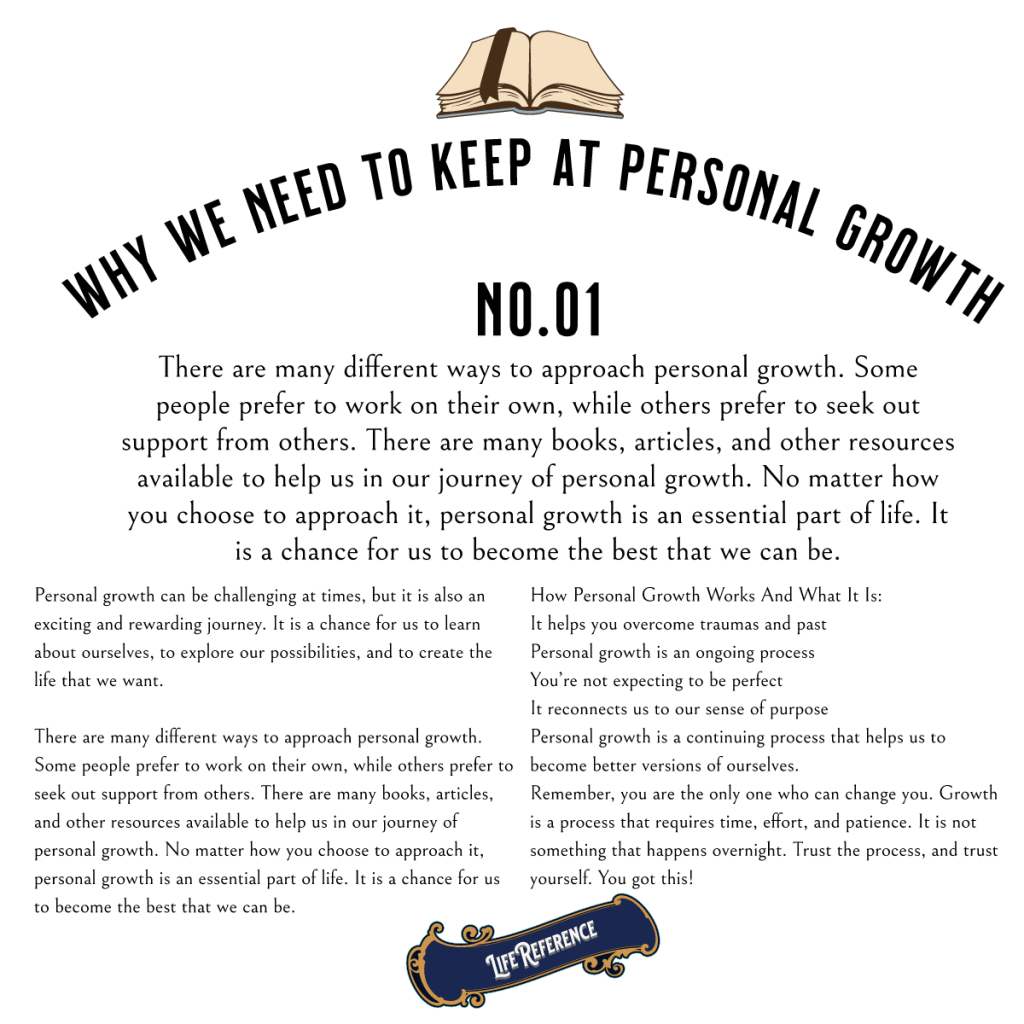
There are many different ways to approach personal growth. Some people prefer to work on their own, while others prefer to seek out support from others. There are many books, articles, and other resources available to help us in our journey of personal growth. No matter how you choose to approach it, personal growth is an essential part of life. It is a chance for us to become the best that we can be.

It helps you overcome traumas and past

Personal growth is a way to help you heal from past traumas. It can also be a way to deal with past traumas, and it may even be about overcoming past traumas. The goal of personal growth is to make you stronger in every way possible so that even if you’re attacked again, the experience won’t hurt as much as it once did.

personal growth is an ongoing process

Personal growth is a continuous process. You don’t have to be perfect, and you shouldn’t be comparing yourself to others. It’s not a competition—it’s a journey!

In order to grow, all you need is the right attitude and the willingness to work on it every day (or at least most days).

You’re not expecting to be perfect

You’re not expected to be perfect, but you are expected to try. If you have a goal, the only way to achieve it is by putting in the work. No one is going to do it for you—this is not a fairy tale where your hard work will be rewarded because of some random circumstance that happens out of thin air.

The important thing about personal growth is that it doesn’t happen overnight; this isn’t an overnight success story with a happy ending right at the end of chapter one (and if it does seem like that’s happening in real life, then they’ve probably done something shady). Personal growth takes time and perseverance—that’s why some people give up after two days while others can keep going all week long!

But just because it takes time doesn’t mean that we should give up on ourselves completely; instead, we should remember these short-term goals and use them as stepping stones toward our long-term dreams.
it reconnects us to our sense of purpose

The more you know about who you are and what your purpose is, the easier it will be for you to stay focused, motivated, and happy. Understanding yourself helps you make better decisions about the type of lifestyle that will be best for your well-being.

It’s important to keep in mind that your purpose can change over time. We often find ourselves in situations where our priorities shift from one thing at one point in life to another thing at another point in life. For example: when we’re young adults with little responsibility outside of school or work, our main focus may be having fun with friends and pursuing hobbies; as we get older (and perhaps have children), we may find ourselves wanting a greater sense of purpose—perhaps through volunteering or starting a business venture; when retirement rolls around many seniors seek out opportunities where they can volunteer their time or give back to those less fortunate than themselves.

The only way this can happen is if we create space within ourselves by setting aside time during each day where we take care of our mental state—by reading books on self-help topics such as personal growth or spirituality; meditating on positive affirmations such as “I am beautiful inside”; exercising regularly so that our bodies feel good too!
Personal growth is a continuing process that helps us to become better versions of ourselves.

Personal growth is a continuing process that helps us to become better versions of ourselves. It’s not something you can do once and be finished with. Instead, it’s more like climbing a mountain—you start at the base and journey toward the peak, but there will always be another mountain to climb after this one.

Personal growth is never complete; it’s an ongoing journey that starts with you making choices about how you’ll live your life. You can’t make someone else grow or change; they have to choose that direction for themselves by being willing to take on new challenges, experiment with different ideas, accept advice from others (including yourself!) and learn from their mistakes along the way.

At the end of the day …

If you’re not sure where to start, just pick one thing and do whatever it takes to make that change. You will likely find inspiration in the process of doing that one thing.

Research shows that we only grow by stretching ourselves beyond our comfort zones. This is why we need to keep at personal growth even when it feels like a chore or too much to handle.

Remember, you are the only one who can change you. Growth is a process that requires time, effort, and patience. It is not something that happens overnight. Trust the process, and trust yourself. You got this! Be patient with yourself and keep going even when you don’t see results immediately. Just like anything else in life, the results of personal growth take time, but they are worth it.

How To Combat Burnout

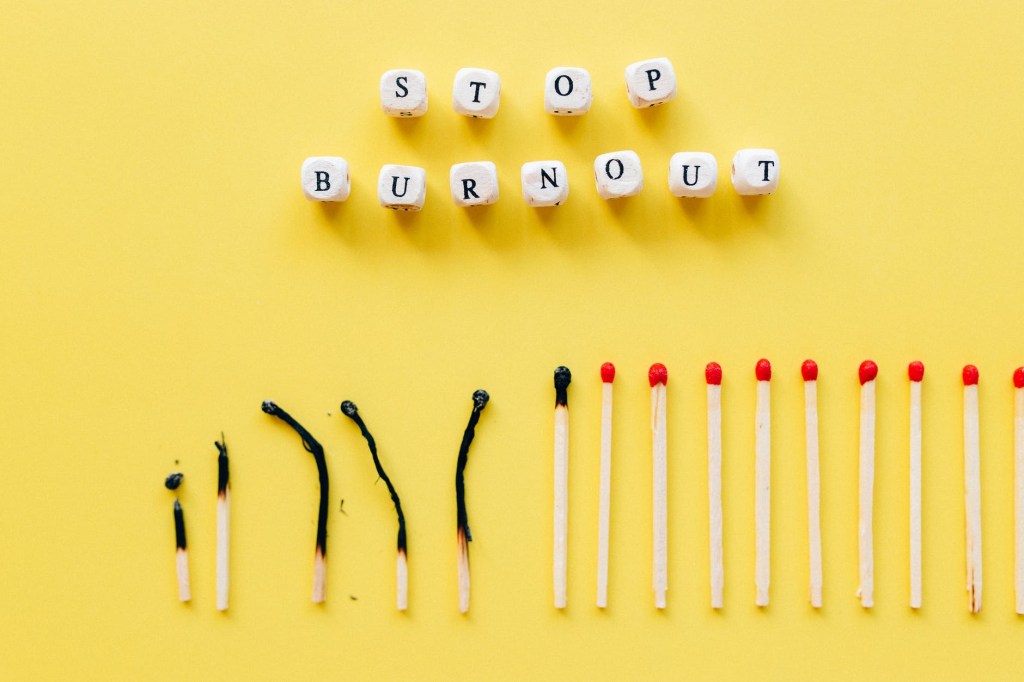
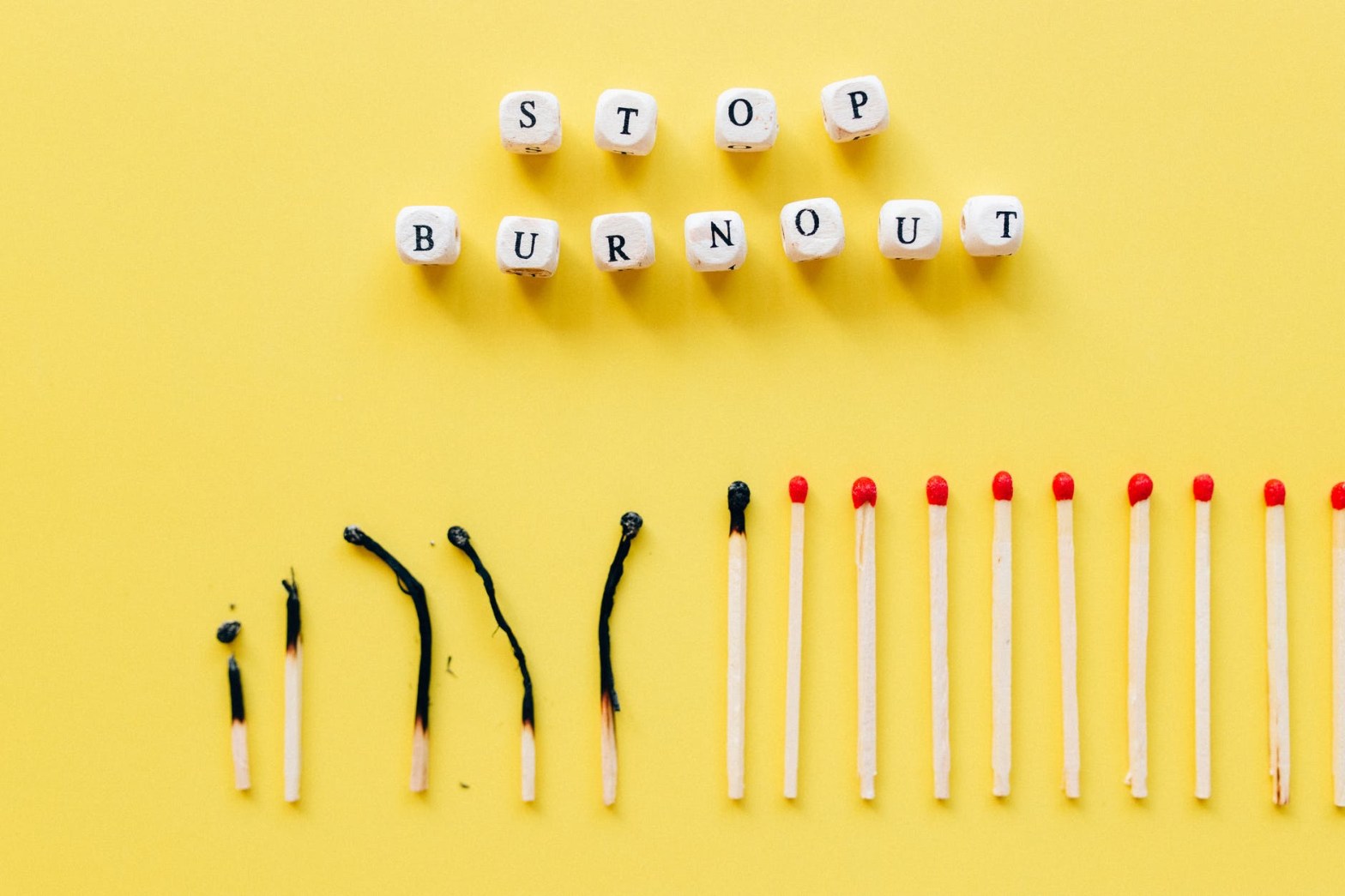
Burnout is a state of physical, mental, and emotional exhaustion that can be caused by prolonged or excessive stress. It is important to be able to recognize the signs of burnout in yourself and others so that you can take steps to prevent it. Burnout is a serious problem that can have a negative impact on your health and well-being. However, by taking some time for yourself, talking to someone about your stress, and making some changes at work, you can start to recover from burnout and feel better. So, what can you do?

Recognize The Signs

Burnout doesn’t happen overnight. It’s a gradual decline that happens over time. The first step is to recognize the symptoms, so you can take action before it gets too bad. Here are some examples of burnout symptoms:

  • You feel tired and exhausted all the time
  • You’re falling behind on work or other commitments
  • You can’t seem to motivate yourself
  • Your relationships are suffering

Get Some Rest

You may think that getting rest is something you should be able to do without instructions, but if you’ve been working hard and have been stressed out, it’s possible that your body has forgotten how. You might not realize how much sleep you need until it’s too late—and then you’ll feel terrible.

Getting enough sleep is crucial for our mental health, but we don’t always get the amount we need because of our busy lives or other factors. If this is true for you, make an effort to get good sleep each night. You can use apps like Sleep Cycle or Google Assistant to help remind yourself when it’s time to go bed; these apps will track how long your brain needs before going into deep REM sleep so as not to disrupt your slumber cycle unnecessarily (you’ll thank them in the morning).

Cut Back On Your Activities

  • Reduce your workload.
  • Cut back on activities that are causing the burnout.
  • Create space in your life for rest and recovery.

You need to recharge, not just recover. This means taking a break from what is causing the burnout and doing something else entirely. It could be anything—watching a movie, reading an engrossing book, or taking a nap.

Next, ask yourself: How do I prioritize? If you’re not sure, this is a good place to start thinking about what is most important and urgent in your life. First, identify all of the items on your list that are most important and most urgent. Next, rank those items by how much time they’ll take up during any given day or week. Then use that ranking system to help with prioritizing what’s more important and what’s less so. Here are some things you could cut out of your life to create space for recovery:

  • Social media
  • Eating too much junk food
  • Drinking alcohol
  • Watching TV with no purpose.

Re-Assess Your Situation

Put your own priorities first. The rest will follow. If you’re uncertain about your values, ask yourself, What defines what’s important in life for me? What do I value most? How do I want to be remembered? If you’re having trouble coming up with answers, that’s okay! No one can define these things easily or perfectly. It takes time to figure it out.

  • First, ask yourself: is this important to me?
  • If you’re not sure, try asking yourself some questions:
  • What is important to me?
  • How do I define what’s important? What do I value most in life?
  • If the answer doesn’t come immediately and easily, that’s okay! It takes time to figure out what matters most. But if you’re struggling with it, don’t be afraid to talk with a friend or family member who knows you well. They might have a perspective that helps illuminate where your true priorities lie.

Find Ways To Recharge

  • Find ways to recharge.
  • Try to find meaning in your work.
  • Control your environment as much as possible.
  • Re-imagine your role and the value of what you do for a living, even if it seems like an impossible task at first.

If none of these things help, look for new opportunities where you can put your talents to use and feel supported by coworkers and management alike—this might mean changing jobs or career paths entirely, but sometimes it’s necessary if you’re burned out on old tasks that aren’t fulfilling anymore.

Self care before caring for others

You may be one of the lucky few who was born with an innate sense of self-care, or you might never have even heard the term before. Either way, if you’re feeling burnt out, it’s time to get on board with this important concept. The first thing that comes to mind when I hear “self-care” is eating healthy foods and getting enough sleep—but there are so many other ways we can care for ourselves: getting a massage or going for a walk in nature; taking some time out to play video games or watch TV; writing in a journal; meditating; going on vacation by yourself (and not feeling guilty about it).

To avoid burnout, we need to learn how and when to take care of ourselves first. We won’t have what it takes to help others if we don’t look after our own needs first! It may seem counterintuitive at first because caring for others is usually what gives us purpose—that’s part of why burnout can sneak up on us so easily. But keep in mind that when we’re busy taking care of everyone else around us without giving ourselves any attention at all (or worse yet…neglecting our own needs), it eventually catches up with us.

What happens if you don’t deal with burnout

So, what happens if you don’t deal with burnout? If you are experiencing burnout, it is important to take action as soon as possible before it gets worse. If you don’t deal with the symptoms of burnout, the following may happen: You will become more irritable and less pleasant to work with You may start taking out your frustrations on others at work or home You could become depressed or anxious You could suffer from insomnia or poor concentration. The longer you leave it, the harder it can be to recover. Remember to first take care of yourself and your own needs. Later you can address other things. Burnout, if left untreated, can lead to catastrophe. Press Tab to write more…

Burnout doesn’t need to be permanent.

Burnout is a normal response to an abnormal situation. It’s important to understand that you are not alone in feeling this way, nor are you at fault for experiencing it. If you’re reading this article, chances are you already know there is no shame in reaching out for help; your colleagues will be glad they don’t have to shoulder the burden alone!

If you can identify any patterns in your work life that may be contributing to or exacerbating the burnout, take action immediately by making adjustments where possible. For example: if working long hours has led you back here again and again, fine-tune your schedule so that it includes more time away from the office (and maybe even some time off).

While it may seem daunting at first glance, there are many things we can do ourselves—both big and small—to manage burnout before it gets out of hand. Take these steps into consideration: find friends who understand what’s going on; don’t hesitate to ask for help when needed; set aside time each day/weekend just for yourself (even if only 10 minutes); exercise regularly (even if only walking around outside during lunch); eat well!

Why should you change your thought pattern from negative and depressed to content and happy?

Negative and depressed thinking is when an individual focuses on the negative aspects of their life and allows these thoughts to bring them down. This type of thinking can lead to a feeling of hopelessness and despair. It is important for individuals to learn how to identify negative thinking patterns so that they can work on changing them.

It is important to change your thought pattern from negative and depressed to content and happy because negativity breeds more negativity. If you are constantly thinking negatively, you will attract more negative things into your life. On the other hand, if you focus on being content and happy, you will attract more positive things into your life.

If you don’t change your thought pattern from negative and depressed to content and happy, you may continue to feel unhappy and may even become more depressed.

Negative and depressed thinking is selfish because it prevents the individual from focusing on anything else other than their own problems. This can lead to a self-centered outlook on life, where the individual only ever seems to focus on themselves and their own struggles. Negative and depressed thinking can also prevent people from living their life to the fullest. When someone is focused on negative thoughts, they may be less likely to take care of themselves or engage in activities that could make them happy. Additionally, this type of thinking can also make it difficult for people to be around others, as they may bring down the mood of those around them, this kind of thinking can make it difficult for the individual to connect with others and form meaningful relationships.


Some benefits of changing your thought patterns from negative and depressed to content and happy may include feeling lighter, less burdened, and more at peace. You may find yourself smiling and laughing more, enjoying life more, and attracting more positive people and circumstances into your life. Your overall health may improve as well, since chronic stress can take a toll on the body.

Think about this, a man who had been through a lot of tough times in his life decides that enough is enough. He decides to change his thought pattern from negative and depressed to content and happy. He starts to see the good in every situation, no matter how bad it may seem. He is also more grateful for what he has, instead of dwelling on what he doesn’t have. As a result, his family life and work life improve drastically. He is happier and more content with his life, and those around him can’t help but be affected by his positive attitude.

The man’s name was John and he had a family of four. He was the breadwinner and worked extremely hard to support his family. However, he was never content with what he had and was always seeking more. This caused him to be stressed out and unhappy most of the time. His wife and children often felt neglected because he was always working or thinking about work. Consequently, his relationships with his family suffered. He was also very negative and pessimistic, which made it difficult for him to find happiness in anything. As a result, his life was quite unfulfilled.

What type of life do you want?

How can you change your thought pattern from negative and depressed to content and happy?

In order to change your thought pattern from negative and depressed to content and happy, you need to first identify the negative and depressing thoughts that you typically have. Once you have identified these thoughts, you can begin to challenge and reframe them. For example, if you typically think “I’m such a failure”, you can challenge this thought by asking yourself “What evidence do I have that I am a failure?”. This will help you to see that your initial thought may not be accurate, and it will also give you a more positive thought to focus on instead.

Additionally, practicing gratitude can also help to shift your thinking from negative to positive. Focusing on the things that you are thankful for in your life can help to remind you of all of the good that is present, even amidst difficult experiences or feelings. Finally, speaking kindly to yourself and treating yourself with compassion can also help to erode negative thinking patterns and establish more positive ones.

Some other things you can do to change your thought pattern from negative and depressed to content and happy are:

1. Set realistic goals for yourself and strive to accomplish as many as possible.

2. Find a hobby or activity that brings you joy and stick with it, even on days when you don’t feel like it.

3. Spend time with people who make you feel good about yourself and avoid those who bring you down.

4. Talk to a therapist or counselor if you are struggling to manage your depression on your own.

What makes a men physically beautiful and attractive

Masculine Features

The ideal body type is the one that you have and are happy with, but if you want to bulk up or slim down, this section will help.

If you’re looking for gains, the first thing to consider is your frame. If you have an apple-shaped or pear-shaped body, it may be harder to build muscle than someone who has a more rectangular shape. Besides that, we all need to follow a similar routine: lift weights and eat more calories than we burn every day. Our bodies need calories in order to grow muscles. However, just eating any extra food won’t be enough; make sure your overall diet is balanced and contains plenty of protein (which helps build muscle). Stop drinking soda and start drinking milk instead—it’s loaded with vitamins and minerals that’ll speed up recovery time when working out.

If you’re looking for ways to slim down, try cardio exercises like running or cycling four times per week—this helps burn fat from all over your body because those muscles aren’t being used as much when compared with weight lifting exercises which specifically target certain areas.”

Good Height

So, what type of height is attractive then?

Taller than average seems to be the most attractive height that men and women can be. This is because we associate height with strength and power.

But not too tall, as this can also be intimidating. So, a man who is taller than his partner is especially attractive to both sexes. And being taller than his friends and colleagues will only add to his attractiveness. As will being taller than other men in the room – at least if he is looking for a partner for the night!

Muscles

Muscles can make you feel powerful, but they won’t make you beautiful. Not only is it a narrow and reductionist definition of beauty, it’s also an overrated one; the beauty of men’s bodies lies in their strength, not how they look.

The key to having a body that makes you feel sexy and confident is learning to work with your natural physique. The kind of muscles you can have are determined by your body type; there are three main types, ectomorph (lean), mesomorph (muscular), and endomorph (stocky). Endomorphs naturally have more muscle mass than the average person, so it takes them less time to develop bigger muscles. Ectomorphs struggle to build muscle mass as fast because their bodies tend to be thin and lean. Mesomorphs are somewhere in between—they can still get bulky if they put on enough weight or train for hypertrophy, but it comes a little easier for them than endomorphs because they’re already built with more muscle bound in their bodies.[1]

For example, Vin Diesel was born an ectomorph but went through major fitness training to develop his buff physique.[2] If he hadn’t been willing to put in all that extra effort toward getting big muscles, he would probably still be handsome today—but not with the same iconic muscles that made him famous.

There’s no point trying to become someone else’s idea of beautiful when you can be yourself instead!

Hair

Hair is an important part of what makes a man physically attractive. Examples of hair are:

  • Thick, shiny hair. This type of hair is very pleasing to look at, and looks like it could be used to insulate a house in the wintertime. If your hair is not thick and shiny, consider getting extensions or consulting a wig maker about alternative options.
  • Hair that is combed in a way that is pleasing to the eye. Men who have combed their hair in an aesthetically pleasing way will appear more attractive than men whose hair does not seem to have been combed recently. Some men with longer hair choose to put their hair up into curls like Princess Leia or let it hang loosely down their back, while some men prefer to wear their long locks in tight dreadlocks that only come undone when they enter hot water. It’s important to remember that all styles are beautiful!
  • Highlights, lowlights, and other coloring techniques can enhance your natural beauty and make you more physically attractive by adding dimension and interest to your face as well as making you more approachable. Highlighted tips (like those sported by Justin Bieber) can add flair and personality to your style without being overwhelming for those who aren’t ready for bold color choices just yet; ask your stylist about how this technique would work on you!

Good Looking Face

Your overall face shape is a big part of whether or not you are considered to be good looking. Some people have very symmetrical faces, another factor that contributes to being physically attractive. If you have a heart shaped face, many consider this to be an ideal facial structure and it means you are considered good looking. A heart shaped face is defined as having a narrow forehead and cheekbones with a wider jawline and chin areas. You also want to make sure that your eye brows are nicely shaped and arched the way they should be. Your eye brows can change your appearance dramatically, especially if they are not in good shape or the right thickness for your face shape.

As for the eyes themselves, men who have green or blue eyes are often considered more attractive than those who do not. It’s also important that one’s eyes look bright and alert, so it’s beneficial to try and get as much sleep as possible and drink plenty of water throughout the day so that your skin stays hydrated enough so that your eyes don’t look dark or baggy underneath them from a lack of sleep.

Your nose has an impact on how attractive you look as well – small noses tend to accentuate better looking faces while larger ones tend to detract from the attractiveness factor so plastic surgery might be an option if you don’t like the looks of yours too much but keep in mind it can be expensive!

Impeccable Style

A man who can dress is a man who gets the girl. You know that, and you know how to make it happen. Impeccable style is one of your defining characteristics, and you’re always on the lookout for ways to improve. You can spot trends before they hit, and you know exactly how to combine various pieces from different eras. It’s not about copying what someone else wears; it’s about wearing clothes that are true to yourself while being aware of current styles. Your closet features a mix of timeless staples with an original spin that only enhances their appeal. This isn’t just something you like doing—it’s something you’re good at, and it shows every time you leave the house.

Perfect Smile, or lack of it in a certain guy

Somewhere along the line, I heard someone say that a woman will forgive anything from a man with a great smile. In fact, the smile is one of those “soft” traits that can make you more attractive to women.

A great looking smile does not necessarily mean perfect straight teeth and pearly white color. A great smile radiates confidence and self-esteem, which in turn makes you appear more attractive to others. Some of the most charming and beautiful smiles are ones that aren’t symmetrical or have imperfections in them, but because they are so rare they stand out as being perfect. The person who has this type of smile is confident enough to laugh or smile at your jokes even if they aren’t funny because they don’t need approval from anyone else. This kind of confidence is highly attractive to people around them (especially women). On top of it all, it looks like she really means it when she gives you her gorgeous grin!

The key is to have the body type that you have while being healthy and happy.

It is not easy being young and beautiful. There are pressures from the media, cultural norms and your own internal dialogue that dictate how you should look. Body dissatisfaction is common among both men and women, as well as other gender identities, and most people struggle with some aspect of their appearance. However, there are ways to be more content with your body type while still taking care of yourself.

The key to being happy with your physical appearance is actually accepting who you are genetically predisposed to be. Everyone has a different genetic makeup that dictates what his or her body looks like when healthy: some people naturally have long limbs, others have lean bodies, etc. The idea that everyone should look the same—skinny, athletic or muscular—is simply wrong because genetic variation has made it impossible for all humans to achieve this ideal. You can find strategies for feeling better about whatever body type you have. For example, if you feel discouraged by your lack of height, focus on clothing styles that make it appear as though you’re taller than you are (e.g., vertical stripes rather than horizontal ones). Another way to be more satisfied with whatever figure nature gave you is to become healthier; whether this means eating better or exercising more often. Even if these things don’t change how much muscle mass or chubbiness you have on your frame, they’ll help improve how strong and agile you feel in everyday life!

Beauty is in the eye of the beholder…

There’s no one answer to this question because beauty is in the eye of the beholder. However, some physical traits that are often considered to be attractive in men are a good height, muscles, highlights in their hair, and a great smile.

Men: Take Care Of Your Friend Downstairs And He Will Take Care Of You. Why And How To Take Care Of Your Penis.

The penis is one of the most important parts of a man’s body. Not only does it play a vital role in urination and reproductive functions, but it is also an important part of a man’s sexual health. Because of this, it is important for men to take care of their penis and to be aware of any changes that might occur.

Penile cancer

While penile cancer is relatively rare, it is still one of the most common cancers in men. According to the American Cancer Society, there will be about 2,470 new cases in 2019 alone.

Penile cancer usually starts with the growth of abnormal cells on the skin of the penis. These cells can then grow into tumors. If left untreated, penile cancer can spread to other parts of the body and eventually lead to death. Fortunately, there are several things that men can do to reduce their risk of developing penile cancer.

If anything seems unusual , they should see a doctor right away . In addition to being alert for signs of cancer, men also need to take care of their penis for overall good health .

Safe Sex

Perhaps most importantly, they should practice safe sex by using condoms during intercourse. In addition, they should avoid activities that put them at risk for HPV infection, such as unprotected sex with multiple partners or sharing needles for drug use. Men should also examine their penis regularly for any changes in appearance or symptoms such as pain or bleeding .

Some other tips include:

A man’s penis is a sensitive organ that needs to be cared for in order to keep it healthy and functioning properly. There are a few simple things that a man can do to take care of his penis and keep it in good condition.

Firstly, it is important to maintain good hygiene habits, so wash the penis regularly with warm water and mild soap. Avoid using harsh soaps or anything that could irritate the skin. It is also important to dry the penis thoroughly after washing, as moisture can lead to irritation or even infection.

Another important aspect of penis care is choosing the right underwear. This means and wearing loose-fitting clothing. Tight fitting clothing can restrict blood flow and cause discomfort, so it is best to avoid these items. Instead, opt for loose-fitting boxer shorts or briefs that will allow your penis room to breathe and stay comfortable all day long. When at home, go around commando or if you live alone, go around naked.

Notice anything off… go to the doctor!

Lastly, if you notice any redness, swelling, pain, or other changes in your penis, it is important to see a doctor right away as these could be signs of an infection or other serious issue.

By taking good care of your penis and being aware of any changes, you can help ensure a happy and healthy life for both you and your partner!

– Quit smoking cigarettes : Smoking damages blood vessels and therefore impairs blood flow , including circulation to the penis .

When playing…

It’s also important to eat a balanced diet and get regular exercise , which can help improve blood flow throughout the body , including to the penis which is important for the fun times 😉 .

When it comes to masturbation, most men think only about how they can please themselves. However, it is important to take care of your penis when masturbating in order to maintain good sexual health. Here are a few tips on how to do so:

1. Use Lubricant Using lubricant during masturbation can help reduce friction and prevent the skin on your penis from becoming irritated. It can also make the experience more pleasurable. Be sure to choose a quality lubricant that is designed for use with sex toys and masturbators.

2. Go Slow at First If you go too fast or too hard at first, you could end up injuring your penis. Start slow and increase the speed and pressure as you become more aroused. If you start to feel pain, slow down or stop altogether.

3. Don’t Forget the Base When stroking your penis, be sure to include the base in your grip. This will help ensure that you don’t put too much pressure on the sensitive head of your penis. Focusing the majority of your strokes on the shaft will also help prevent premature ejaculation.

4. Clean Up Afterwards Wash your hands and penis with soap and water before masturbating, and again afterwards. This will help remove any bacteria that could cause irritation or infection .

It’s no secret that the penis needs special care when it comes to sexual activity. After all, this is a sensitive area that can be easily injured. That’s why it’s important to follow some simple guidelines when engaging in sexual activities involving the penis.

1. Always use plenty of lubrication during intercourse. This will help reduce friction and prevent any potential injuries. Just make sure to avoid anything that could potentially irritate the skin, such as scented products or anything with chemicals.

2. When receiving oral sex, it’s also important to use a condom. This will help protect against STDs and other infections. It’s also a good idea to trim any pubic hair around the base of the penis beforehand, as this can also cause irritation during oral sex.

A man’s penis is not only a physical organ, but also a powerful symbol of his masculinity. Consequently, the way a man cares for his penis can have a profound effect on his mental health.

So the long and the short of it …

The penis is a sensitive organ that needs to be cared for in order to keep it healthy and functioning properly. There are a few simple things that a man can do to take care of his penis and keep it in good condition. These include practicing good hygiene, choosing the right underwear, and being aware of any changes or symptoms.

Tips on how to take care of your penis and improve your mental wellbeing:

1. Keep it clean – Regularly wash your penis with warm water and mild soap. This will help to remove any build-up of bacteria and keep it free from infection.

2. Check for STIs – If you have unprotected sex, make sure to get tested for STIs (sexually transmitted infections) regularly. This way you can catch any infections early and treat them effectively.

3. Use protection – Always use condoms when engaging in sexual activity to reduce the risk of STI transmission. This will also help to keep your penis healthy and free from infection.

4.Practice safe sex – In addition to using condoms, always practice safe sex by avoid sharing needles or coming into contact with bodily fluids that could contain viruses or bacteria (e.g., blood, semen).

5 Manage stress – Stress can wreak havoc on your body and mind, so it’s important to find ways to manage it effectively. Exercise, meditation and deep breathing are all great stress-busters that can also promote overall good health

Download this article here:

Things Your Boyfriend Should Never Do – A few things that could mean there are having relationship issues.

Stop doing the little things that made you fall in love with him

Your boyfriend should not be the kind who forgets the little things that made you fall in love with him. If he doesn’t remember your favorite color, it’s okay to remind him or ask him what it is. He should also not forget to text you back. As in, as soon as he gets off work and you’re both home at the same time (or at least within two hours of each other), texting is required. But if he ignores your texts and messages—and there’s no reply from his phone—it should make you wonder if something is going on. You know how guys get busy when they are working and don’t have time for a girl? Maybe it’s not that he doesn’t have time for you, but rather his mind seems elsewhere…

Make you feel crazy

He makes you feel like you’re crazy. Does he often patronizingly tell you that there’s “nothing wrong,” even though you know something is up? He may be a gaslighter, or someone that tries to make others look or feel crazy by downplaying their emotions. This can be a sign of a toxic relationship and an unhealthy power dynamic. If this happens to you, confront your partner about it. Try to understand why they act this way and if they see the problem with their behavior, so that you can better decide whether or not your relationship is healthy enough for both of you. If the situation can’t be rectified, don’t hold it against them too much—it may simply be a sign of unhappiness on his part that he is taking out on you in a harmful way. Move on and give yourself room to grow from the experience.

Become controlling of your time

If your boyfriend starts becoming controlling of your time, he could very well be having relationship issues. For example, if he only wants to spend time with you when it is convenient for him and when he can control the situation, then you should trust that something is off.

While dealing with a controlling boyfriend can be frustrating, there are ways you can work around it. One thing you could do is try very hard to read between the lines and figure out what’s really going on in his head. If this doesn’t work, don’t let yourself become a victim to his mood swings—stand up for yourself and make sure your needs get met as well!

The consequences of not paying attention to this sign are serious: if you don’t establish clear boundaries early on in the relationship, then your partner may start taking advantage of you down the road. Don’t let that happen!

Become passive-aggressive towards you

This is a common behavior that many people engage in. The reason for this behavior can vary from person to person, but there are some common reasons why people act this way. It may be a learned behavior, it might be a way of getting back at someone, and sometimes it may be used as an anger outlet.

In other instances, the passive aggressive behavior is an attempt to get their way or manipulate someone into doing what they want them to do because they know that being direct will not work. This often shows up when couples are having relationship issues like communication barriers and unresolved expectations.

Stop listening to you and offer advice instead

One of the great things about your boyfriend is that he’s so caring and giving. He likes to tell you things that he thinks might help you, but sometimes he forgets to just listen. That’s why it’s important to let him know when you need a listening ear instead of advice. It’ll be good for both of you, because then you can talk about what is going on in your life without feeling like someone is judging or acting like your parent (unless they are actually a parent). Letting your boyfriend know that there are times when you would rather have them listen than talk will really help the relationship and will bring the two of you closer together.

Stop trying to understand your side of the story

  • Understanding is a vital part of any relationship. If you have a good boyfriend, he will always try to understand your side of the story. We all know that relationships can be tricky, and in order for them to work, both parties need to feel heard and understood.
  • Another thing your boyfriend should never do is show poor listening skills when you are trying to explain your side of the story. It’s important that he asks questions about what you’re saying and maintains eye contact so that he can process the information you’re giving him with as much understanding as possible.
  • Try not to hold it against him if he does these things, because even though they aren’t ideal behavior for your boyfriend, it can be hard to remember this stuff all the time!

Let you feel down about yourself

  • He’s not cool with your friends.
  • He doesn’t listen to you when you’re upset.
  • He cancels plans at the last minute and doesn’t think it’s a big deal.

Sometimes it seems like no matter what we do, our boyfriends still manage to act like jerks now and then—and as hard as we try, there are always a few things we just can’t seem to get them to stop doing. But instead of getting frustrated because your boyfriend won’t do things they way they should be done, start thinking about why they aren’t doing the right thing in the first place! If your boyfriend is making you feel bad about yourself or bringing you down in any way, it may be because he is having some relationship issues of his own that he needs help working through.

Leave you hanging for hours and not tell you why or where he’s gone

Your boyfriend should never leave you hanging. What exactly do I mean by this? Well, let’s say that you and your boyfriend have plans to hang out at 7 pm, but your boyfriend doesn’t show up until 11 pm without a word of explanation as to where he is or why he’s late. What should you do?

For starters, if your boyfriend has a habit of leaving you hanging in situations like this one, it is important for your own self-respect and well-being that you make him aware that his behavior is not okay with you. It is also important that you speak up so that he knows the way he’s behaving isn’t helping the relationship grow in a healthy way.

Relationship issues are often complex and difficult to navigate, but it can be helpful for couples to remember what healthy communication looks like when they’re disagreeing with each other about something.

Stop giving you attention despite knowing just how much you love it

Sometimes, the only thing a woman wants is some attention. You know how when you see a really cute dog and all you want to do is play with it? It’s like that, but with your boyfriend. In fact, it’s probably more than just “like” that; it might actually be exactly like that.

Girls need attention to feel loved and cared for in a relationship. Some can handle not getting as much attention as they’d like, but most have tendencies to act out (verbally or physically) if they don’t get enough of it from their significant other. This doesn’t always mean that she’s in the wrong for doing so; sometimes her reaction is justifiable because she loves him so much and needs to feel cared for. When this happens, though, the man should always try his best to make up for his lack of devotion by giving her even more attention than he did before. At least…that would be an ideal scenario, right?

Give up on being romantic and thoughtful. And bring on the monotony.

Now, guys have a reputation for being romantic. However, if your man has given up on this tradition, then you may have problems.

For instance, it can be hard to romance someone in the early stages of a relationship because you don’t know what they like and what they would enjoy from their partner. However, after years of being together and building up a strong relationship, there should still be romance and affection between the two of you. If your boyfriend doesn’t show any interest in keeping the spark alive in your relationship, then he might not care about the future of your relationship.

We should never allow a man to make us feel like we’re less than who we are.

You are a beautiful, intelligent and interesting woman. You can do anything a man can do, but better! You should never allow a man to make you feel like you’re less than who you are. If he does so, it means that he is not mature enough for this relationship. It could mean that he is having issues in his life.

In the unfortunate situation where your boyfriend makes you feel bad about yourself, be aware of your own self-worth. Then know that even still, there are some things you shouldn’t do because they may upset him more.

To wrap it all up:

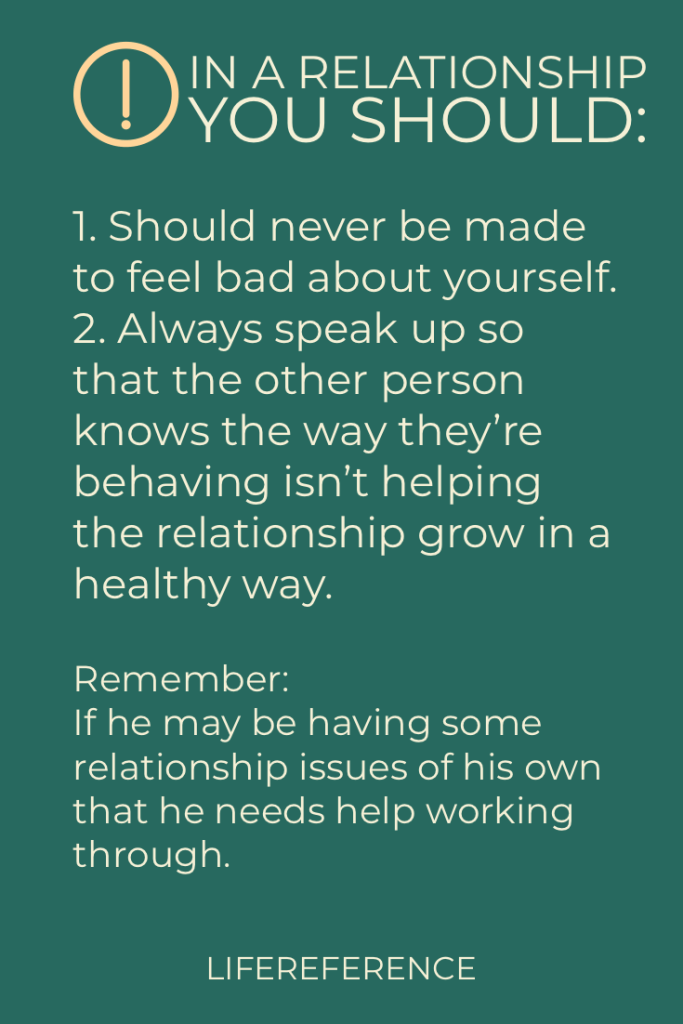
1. Your boyfriend should never make you feel bad about yourself.

2. If he does, it may be because he is having some relationship issues of his own that he needs help working through. 

3. It is also important that you speak up so that he knows the way he’s behaving isn’t helping the relationship grow in a healthy way.

For men: It’s OK if you cry and feel pain

Would you agree brothers that society needs to learn that it is perfectly natural for men to have emotions and that it is OK for them to express them. With the recent rise in discussions about mental health, there has been a shift in how we talk about emotions, but there is still a long way to go.

Change doesn’t happen overnight, but we can start by gradually breaking down the barriers that prevent us from being our true selves. We can start by acknowledging that men are human too and that it’s OK for them to show their emotions. This article is a step in making changes…

You are allowed to cry and feel pain

  • If you are a man who has been taught that crying is weak, please know that this is false. Crying is a natural and normal human response to pain—it’s biologically hardwired into our makeup. Everyone wants to be seen, heard, and understood. Tears help us achieve this in moments when words simply cannot convey the intensity of our feelings.
  • There are many ways we can feel pain: physical pain (such as an injury), emotional pain (like losing someone we love), or psychological pain (when we experience trauma). When confronted with these painful experiences, it’s common for people to feel overwhelmed by intense emotions, even if they’re not sure why they feel the way they do.
  • Crying and being open about your feelings doesn’t mean you aren’t man enough—it means you’re big enough to accept yourself as you are.

Men, you are allowed to have emotions, it’s ok!

What if I told you that it’s OK to feel pain, and that it’s OK to cry?

Society has this idea of what men should be. We expect men to be strong, independent, powerful, fierce and able to take on whatever is thrown at them with confidence and determination. When we see a man cry or express his feelings in front of other people, we may think:

  • What are you doing? Men don’t cry!
  • You need to get over that already!
  • Don’t be such a wimp!

As a result, many men are taught from a young age that they aren’t allowed show their emotions for fear of being called names like “soft” or “weak.”And so as adults (or even younger), when something bad happens — like losing someone close or failing an exam — we may turn off our emotions in order not feel the pain.

You don’t have to be perfect.

Do you know what else is important? It’s OK if you cry and feel pain. You’re allowed to be imperfect, to make mistakes, to be wrong and fail. You’re allowed to not know things and say “I don’t know.” You’re allowed to ask questions.

It’s OK if you don’t conform perfectly to the stereotype of what it means to be a man(though I’d encourage you not to). Love yourself the way you are; there is no standard that needs conforming too or achieving.

Your body is not an object

Your body is the temple of your experiences. It is your sense of touch and smell; it is your skin and bones, muscles and lifeblood. Your body is not an object for other people to use for their own pleasure, it is not a tool to be used in exchange for being attractive to them.

Being healthy is more important than being attractive.

Your body should never be a source of shame or anxiety. It’s OK if you cry and feel pain—you are human! Don’t make fun of other people’s bodies—they are temples too!

You aren’t responsible for everything

You don’t have to be the family or business leader, or the person in charge of everything. You’re not responsible for other people’s happiness and you’re not responsible for other people’s problems.

You’re doing your best, and that’s enough. If you feel like you want to do more, then go ahead. Otherwise it’s OK if you take a break and it’s OK if you take a breath. It’s OK if you say no sometimes. It’s OK if you aren’t available all day every day to help everyone with everything that they need. You’re not responsible for the universe—just for what happens in your life and relationships with others, which is already quite a challenge!

It’s OK to be vulnerable

It’s important to be vulnerable.

Everyone experiences pain, but it’s often difficult to sit with that pain or reach out for help when we need it. We tend to bury those feelings and refuse to address them, which causes them to fester inside of us. When that happens, we may numb the pain with substances such as drugs or alcohol.

The problem is that being vulnerable doesn’t always come naturally. It requires courage — showing your sensitive side can make you feel weak and exposed — but it’s important to remember that everyone experiences hurt, embarrassment and shame at some point in their life. So how do you embrace vulnerability?

One way to become more open is through practicing mindfulness meditation, which can allow you to “sit with discomfort by observing thoughts without judgment without needing the thoughts themselves to go away.” The idea is that we are all born with a natural ability to be present in the moment; however, over time we lose sight of that ability because our minds get caught up in things like stress and worry about the past or future. Our brains also have a tendency to have negative thoughts because they are hardwired for survival, so practicing mindfulness can help us develop inner strength and compassion for ourselves by rewiring those neural pathways.

It’s OK to have feelings

This is a principle that we learn from a very early age: boys don’t cry. Boys are strong and tough; they stand up for themselves and don’t let anything get to them. We grow up believing that we must always be in control of our emotions, which can manifest itself in different ways:

  • Feeling like you can never break down or let others see your tears.
  • Having to suppress your anger because you were taught that it’s not manly to express it.
  • Hiding sadness, loneliness and pain with humor, or overcompensating by yelling at others when you feel helpless.

I understand the impulse behind this way of thinking: It feels safer to avoid feeling pain or fear at all costs because both often come with shame attached. But these feelings aren’t something that we should be ashamed of having—they’re simply part of being human, and men are human too (in case you weren’t sure). It takes strength to show vulnerability and share what we feel with the world around us. In fact, hiding our true feelings is the sign of weakness; having the courage to face our emotions head on is what makes us strong people who can connect on a deeper level with those around us.

It’s OK to change your mind about something

We change our minds. We make mistakes. Sometimes we just don’t know what to think anymore and need a second opinion.

There’s nothing wrong with that, but it can be disheartening when you’re in the middle of something important or you’ve been working towards something for some time and then are told you were wrong.

We are all quick to hold a grudge or judge others based on our own opinion, but we should remember how quickly things change. We should let go of the past, learn from mistakes and make new discoveries with an open mind, because things are always changing in this world around us.

It’s OK to ask for help

Asking for help is not a sign of weakness. Being vulnerable is different from being weak. Weakness implies you’re incapable. Vulnerability, on the other hand, means you’re brave and strong enough to acknowledge that you need support.

You ask for help when you need it. You don’t always have to be the one to help others, it’s OK to get help from others as well.

It’s OK to grieve

You can grieve for any reason. You don’t have to have lost someone you love. You can grieve a job loss, or the loss of your health, or losing something that was important to you.

What is grief like? For many people, it comes in waves. One moment, you may feel like yourself again…and then something will happen—maybe a song will come on the radio—and suddenly you find yourself sobbing uncontrollably and feeling sadder than you ever thought possible.

Your grief doesn’t have to follow any timetable but your own, either. It’s OK if everyone else around you seems to be moving forward with their lives while yours feels frozen in time following a loss of some kind. Don’t be afraid to let people know what you need from them during this time: whether it’s space, or support, or help with daily tasks while you focus on grieving and healing emotionally (or all of the above).

Growing up doesn’t mean losing your vulnerability and sensitivity; it means acknowledging them and being comfortable with them.

If you usually try to bury your feelings, know that by doing so you are not acting with strength or courage. You are acting with fear. Fear of being hurt. Fear of being rejected (rejected by whom? yourself?).

We live in a society where it is not considered “manly” to show emotions other than anger and joy (even though in the past those were seen as feminine emotions). It is time that we change this. While men can have the same feelings as women, they often express them differently, for example through verbal expression or acts of service instead of tears.

In our culture numerous conditioning factors contribute to how we perceive masculinity and femininity: family dynamics, schooling, media and advertising messages, peer pressure from friends and colleagues, religious beliefs… In some cultures men are expected to be less emotional than women. They are taught since childhood that it is wrong for them to cry. So what happens when things get tough? Most likely they will shut down emotionally and suppress their feelings rather than express them appropriately which can lead to serious health issues like depression and anxiety disorders.

So brothers remember:

It’s okay for men to feel pain and cry. It’s okay for men to be imperfect. Men are allowed to have emotions and it’s okay if they don’t conform perfectly to the stereotype of what it means to be a man. Men’s bodies are not objects and being healthy is more important than being attractive. Men are not responsible for everything and it’s okay to be vulnerable. It’s okay for men to change their mind about something and it’s okay for men to ask for help. Men can grieve for any reason. Growing up doesn’t mean losing your vulnerability and sensitivity; it means acknowledging them and being comfortable with them.

Why your mum was right – why you should tidy your room

Clutter can increase your stress levels

We all know that stress is a natural response to a challenge. Clutter can be challenging and stressful in many ways. It can make it difficult to find things, to relax, to get things done, or even to get to sleep.

You know you’ve been there: You have a deadline for a project at work, but you can’t find your notes because your desk is covered with dust and old newspapers. Finally you find what you need – in the bin!

It happens all the time.

Clutter makes it more difficult for us to focus on those tasks that are important to us. If we’re distracted by clutter we can’t concentrate enough on our projects at work or even enjoy activities at home like watching TV or reading a book because some part of our mind is busy trying to figure out how we’re going to deal with the mess around us before our boss finds out about it (or worse).

Clutter affects your ability to move around your home freely

In the immortal words of comedian Louis C.K., “Everything is amazing and nobody’s happy.” It’s an absurdist perspective that helps put things in perspective, but it also has a ring of truth to it. We live in a world that offers so many incredible luxuries—air conditioning, smart phones, high-speed internet—and yet we’re still unsatisfied. Perhaps this is because our lives are too cluttered by the unimportant things: our overstuffed closets, our junk drawers full of old batteries and tangled cords, our garages overflowing with broken lawnmowers and trash bags filled with packing peanuts from online shopping orders we don’t even remember making. All this stuff—these shiny distractions from living life to its fullest—steals our focus from what really matters and keeps us from being truly happy.

Clutter wastes time

Everyone knows that one of the most maddening experiences is digging through piles of junk looking for something. It’s one thing if you’re trying to find a remote control buried under a pile of cushions, but it can be much worse when you have to search your room for hours to find your keys or your wallet. Everyone loses things from time to time, so having an organized room won’t prevent this completely, but clutter only adds more items that could potentially cause stress and wasted time.

If you’re naturally inclined toward organization, then this probably isn’t an issue for you. However, even the tidiest person in the world has areas in their life where they become less organized than they should be – especially when they’re distracted by something else. If you’ve got a cluttered room, then even if you usually know where everything is, there will still be plenty of times when it takes longer than it should to find what you need. And let’s not forget how much more difficult it can be if other people are living with someone who doesn’t share their standards for cleanliness!

Clutter can affect your sleep

While there are many reasons to keep your room tidy (and we’ll get to those), let’s start with some of the more surprising ones. According to scientific research, clutter can affect your sleep and make you stressed—so if your mum used to complain about all the clothes on the floor, she was actually right.

For one thing, a messy room can be a distraction in itself, which makes it harder to fall asleep. Plus, when you’re supposed to be sleeping but can’t because you’re worried about how much stuff is still sitting around unorganized, that’s a real problem too. And poor sleep affects both mental and physical health; it could lead to issues like weight gain or depression.

If these problems sound familiar or have been affecting your life lately for any reason, here are some ways to address them:

Clutter grows

It’s a slow build, that’s for sure. It can be hard to notice at first. You get one little thing here, another there—it all seems innocent enough at the time. But before long, you start getting things because it feels good to get them. And once you start enjoying that feeling, something weird happens: it starts to grow on you—to repeat itself and even become something of a habit. The result? A whole room full of stuff!

So what’s the takeaway? Do your best not to clutter in the first place! I know that sounds like crazy mum advice, but really, decluttering is way more difficult than people give it credit for (no pun intended).

A tidy bedroom reduces stress and improves physical, emotional, and mental health

Psychiatrists have long observed that the quality of sleep we get has a strong correlation with our moods and physical health. The effect of a messy room is sometimes exaggerated, but the relationship is nevertheless real. It’s completely understandable that you might feel like this place needs to be lived in—it’s just that good habits aren’t formed overnight. Having a tidy bedroom, on the other hand, will help you make your home environment conducive to better sleeping and less stress in general.

To wrap it all up…

It’s really important to keep your room tidy for many reasons. A messy room can be distracting and make it difficult to focus on important tasks. It can also affect your sleep and make you stressed. Clutter can also lead to wasted time as you search for things you need.

Job Hunting? 9 Cleaver Ways To Get Your Career Back on Track

It’s been a rough few months. You’ve lost your job and have been looking for a new one, but it seems like every time you get close to landing something the position is filled before you can even apply.

You’re not alone: according to the Bureau of Labor Statistics, the average American worker will have 10 careers in their lifetime. If you’re in the midst of one of those career changes right now, here are 9 clever ways to get back on track and land your next dream job.

1. Take a break

  • Taking a break is important to recharge.

It’s easy to get bogged down in the search for a new job. Even when you’re employed, it can be tough to come home and immediately switch gears into your personal life. Take some time off from your job search. Go away on a weekend trip, or avoid checking anything related to work for the entire weekend. You need time to recharge before jumping back into the grind of searching for employment.

  • Taking a break is important to process what went wrong with your last job search or last job.

It can be hard to admit when something didn’t work out, but it’s an important step in getting back on track again. Maybe you put too much stock in a company that didn’t deserve it, or maybe you made rookie mistakes in interviews that you want to avoid next time around. Use this break from searching and working as an opportunity to really analyze what worked and what didn’t go so well in your last experience with employment, and learn from those mistakes going forward.*

2. Ditch the comfort zone

  • Catherine Chen, a career specialist at ZipJob, advises job seekers to ditch the comfort zone: “Job hunting is a new environment and it’s easy to get stuck in the same routines while searching. Make sure you’re always trying new things when looking for a job. You don’t want to just stick with the same methods of applying because they are what you know best.”
  • It can be scary to look outside your usual circle of friends and family for leads on jobs or ask people you don’t know for advice, but when you put yourself out there and take calculated risks, you get a better chance of getting what you need. “The more often you do something like this,” Chen says, “the easier it will become each time. Start taking small steps outside your comfort zone and work on expanding that zone over time so that it becomes natural.”
  • Think worst-case scenario: If something doesn’t go right in a given situation—you didn’t get some information or help that was promised—what would happen? Would there be repercussions? What would those be? Thinking about these questions before going into any given situation can help prepare you for the unexpected so that if it does occur, it won’t come as an unwelcome shock.

3. Start a side hustle

Side hustling can help you stand out when you’re looking for a new job and get back on the path to a rewarding career. However, it’s not easy to start since side hustles often introduce uncertainty and unfamiliarity into one’s working life. So if you’re considering doing something other than your day job that pays well, here are some tips to help guide you towards your side hustle.

And then there’s the question of how to get started on a side hustle once you’ve decided what it is that you want to do with your spare time. Here are some tips for figuring out how to combine the best parts of all these options (so going from full-time employee to full-time employer won’t be an option).

When starting a side hustle, don’t shy away from thinking about ways in which it will allow you earn money, even if nothing comes quickly or easily at first. Look at all the aspects of earning money: income potential; amount of time spent working; how much flexibility it gives; how big your target customer base is; whether or not customers can pay with cash; whether or not there are any skills required that may be transferable into other jobs (e.g., customer service skills and call center experience); whether or not customers will require assistance (e.g., if they have mobility issues).

4. Learn a skill to enhance your career

If you’re looking to get your career back on track, learning a new skill to enhance your career is one of the most effective ways to do it.

The first step to learning a new skill is identifying which skills are relevant to your industry and what skills you need to learn in order to get a promotion. For example, if you’re in human resources and want to move up in your company, learning how to code might be helpful. If you’re an accountant and want to become an auditor, taking an online course on auditing might be the way forward.

Once you’ve identified which skill will help advance your career, there are many ways that you can learn it:

• Online courses

• College courses

• Books or ebooks

• Meetups or groups at local libraries or community centers

• Formal training programs at companies like Microsoft or Apple that teach people how to code. The follow five suggestion about learning new skills can help get your career back on track or to enhance your career.

  • Learning a new skill can help you get a job. One of the best ways to stand out from other job seekers is to show that you have a unique skill or expertise that employers need. This could be anything from technical skills like programming or web design, to interpersonal skills like public speaking or leadership. The trick is identifying what your market needs and then finding an opportunity that can use your skill set. 
  • Learning a new skill can help you get a promotion. Gaining knowledge in a different area of your field can help you get a promotion. For example, if you’re in sales and want to move into management, learning about the company’s product line could be useful for demonstrating your knowledge of the company’s products at meetings with clients and colleagues. You may not be aware of this, but learning a new skill can help you get a promotion. In fact, according to a recent study by Liferefence, 87% of employers believe that employees who are willing to learn new skills will be more successful in their careers than those who don’t. If there’s something specific in your industry that you want to learn more about, try taking a class or seminar on it. It shows employers that you’re committed to staying current with industry trends, and it could even lead directly to a promotion if they see how much value you add by learning this new skill set!
  • Learning a new skill can help you get a pay raise.  If you are looking to get a pay raise and you don’t want to do what everyone else is doing, then learning new skills can help you stand out.The more skill sets you have, the more valuable you are as an employee. If you can do more than what is required of your job description, then it gives the employer another reason to keep you around. Learning a new skill for your job can help you get a pay raise because you will have another marketable quality you have and will give value to the company you work for. You may want to learn how to do something that will help you in the future, or you may want to learn something that will help you already do your job better. But remember, If you want to get a pay raise, it’s important that you show your employer that you are committed, reliable and dedicated. Make sure that everything is done on time and in accordance with the requirements of the job. If there is something at work that needs to be improved, tell your boss about it immediately so that he or she can take care of it as soon as possible.
  • Learning a new skill can help you change careers. Learning a new skill can help you change careers. As a you learn a new skill, you get access to other job opportunities that you didn’t have before.Learning how to code is one of the most popular ways people are looking to make this career shift, and for good reason. It’s an incredibly versatile skill that has so many applications, from creating websites and apps to developing video games.But if you’re making the switch from another industry, learning how to code isn’t always easy. It can be intimidating and time-consuming, especially if you’re starting from scratch.Learning is not just about getting hired; it’s also about making yourself more marketable and valuable in your current role. The good news is that there are lots of ways to learn new skills and expand your horizons — there’s no better time than now to upskill with courses from Udemy!Learning a new skill is also one of the best ways to take control of your career. If you are unhappy in your job, learning something new will give you the chance to make positive changes in your life.
  • Learning a new skill can help you get a better job. Learning a new skill can also help you find a better job. According to the same study, 47% of employers say they’d prefer hiring someone with less experience but has learned something new over someone with more experience but hasn’t learned anything new lately.

5. Look for part-time work instead of full-time work

As you might guess, finding a full-time job is much easier when you’ve already got a part-time job. But even if it doesn’t lead to a full-time position with the same company, having work of any kind gives you something to put on your resume and is an opportunity for networking.

Consider using your current skills in a new career path through part-time work. If you’re switching careers (for example from being an accountant to becoming a nurse or from being a dog walker to becoming an electrician) look for part-time work that utilizes your former skillset in the context of the new career.

Finding part-time work can be tricky, but there are some creative ways to do it: try reaching out to friends and family and asking them if they know of any open positions; look at local listings on Craigslist and other websites dedicated to helping people find jobs; attend community events like town fairs where businesses will have booths set up advertising their services; approach small companies directly in person and ask if they’re hiring, etc.

6. Find a mentor

Finding a mentor is one of the smartest things you can do to help get your career back on track. A mentor is someone who has more experience than you and can help you grow professionally. Not only will they give you advice, but they can also open new doors for you. Your mentor may also be able to help with:* Career development* Job opportunities* Getting recommendations* Getting promoted

If this sounds good to you, start by thinking about the people in your life who could be your potential mentors. Perhaps it’s your old boss or a friend that works in the same industry.

7. Make some sacrifices to put yourself first

If you are feeling like a hamster on a wheel, stop and take a break. Step away from the computer and your job search. You will be more effective in the long run if you wait until you are in a better place to begin again.

  • Go for a walk or work out (this will release endorphins and help clear your head).
  • Take some time with family or friends — especially people who make you laugh.
  • Plan an adventure; go somewhere you’ve always wanted to explore.
  • Take a class or attend an event you wouldn’t normally consider—the experience can be enlightening!
  • Do something that makes __you__ happy, something completely different from all the things that stress you out, something that puts __you__ first for once. Embrace it and enjoy it! If there is ever a time when taking care of yourself should come first, it’s now, when everything else feels so awry.

8. Improve Your Network Skills

Let’s face it: networking is a vital part of any job hunt. Many experts believe that upwards of 80% of jobs are never publicly advertised, but are instead filled through personal contacts and referrals. Therefore, improving your networking skills can significantly increase your chances of landing a new position.

There are many ways to go about improving your networking skills, including joining social and professional networks such as LinkedIn, attending job fairs and hiring events, and even just getting out there by getting involved in the community or industry you’re interested in working in. By putting yourself out there on social media (in a good way!), you allow potential employers to get an idea of what you have to offer them; by meeting people face-to-face at job fairs or industry events, you give yourself the opportunity to make lasting impressions and create helpful personal connections; if you happen to meet someone who could be helpful in finding a new position for you, be sure that you’ve practiced delivering your elevator pitch so that you’ll know exactly how best to introduce yourself without sounding awkward or rehearsed.

9. Believing in yourself is the most important thing.

The single most important thing you can do is believe in yourself. The person interviewing you will be looking for passion and motivation: if you don’t have it, how can they expect it from their potential employees? Have faith in your abilities and your purpose, and bring that to the table.

If fear is holding you back, take a deep breath and remember why you got into this field. You’re here because of a reason! Don’t let doubt or anxiety get in the way of pursuing what matters to you. Anchor yourself in your reasons for being passionate about your work—they are there, just waiting to be unearthed!

Building professional skills and building professional relationships are always great things to do when you’re job hunting.

Building professional relationships is a long-term project and should never be approached as though you’re simply collecting contacts. Social media has made it so we can connect with someone on the other side of the world, but that doesn’t mean you should send out a one-size-fits-all message to everyone in your industry. If you’re asking for a job or advice, make sure you’ve done your research and have something personal to say.

Nurturing and maintaining these relationships is also important. After an initial meeting, don’t stop there. Keep active online and continue following up with relevant information until you’re ready to initiate another conversation with them again. If they say they’re going to send over some information or put you in touch with someone else in their network, follow up at least once more before letting it drop completely.

So in review:

Taking a break is important to recharge and process what went wrong in your last job search. Also, ditching the comfort zone can lead to new opportunities.

Starting a side hustle can be a great way to make some extra money and stand out from other job seekers. While also, Learning a new skill is one of the best ways to get ahead in your career or change careers altogether.

Looking for part-time work can help you get your foot in the door somewhere new. You can also try Finding a mentor which is a great way to get advice and guidance from someone with more experience than you.

Making some sacrifices to put yourself first can help you refresh and refocus for your job search, along with Improving your networking skills can also help you meet new people and find new opportunities.

Design a site like this with WordPress.com
Get started