In order to grow as a person, it is important to take responsibility for one’s own actions. This can be seen in the stories of two people. One took responsibility for her actions and grew as a result, while the other did not and remained stagnant.
The first person, we’ll call her Sarah, made a mistake at work that cost her company money. She owned up to what she did and worked hard to make sure it didn’t happen again. As a result of taking responsibility for her actions, she earned the trust of her boss and was promoted. Sarah is now happier in her job and earns more money because she took responsibility for herself.

The second person, we’ll call him John, also made a mistake at work that cost his company money but he blamed someone else instead of taking any accountability himself even though everyone knew he was responsible.. He continued making mistakes , refusing to learn from them or take any ownership over his wrongdoings . Eventually John was fired . Now unemployed with no references ,John regrets not owning up to his past
Accepting responsibility for your actions can help you to grow personally.
In our society, it is often hard not to point the finger of blame at someone else when things go wrong. Just watch any talk show and you will see people blaming their parents, their friends, their teachers or even complete strangers for everything that has gone wrong in their life.
However, there are benefits to be gained by accepting responsibility for your actions. Not only do you learn from your mistakes but you also learn from your successes. By taking responsibility for both, you will start to showcase traits that are desirable in any person such as honesty and reliability.
You will also become more open-minded and humble as a result of taking personal responsibility seriously.
You need to accept responsibility for your own actions.
You need to accept responsibility for your own actions.
The first step to personal growth is accepting who you are and where you are in life. Acceptance means that you have stopped fighting against yourself, your situation and the world. You have accepted that this is who you are now and that this is your current situation. This doesn’t mean that you can’t change in the future but right now, these are the facts of your life and it makes no sense to carry on fighting against them.
Accepting responsibility for your actions can help you to grow personally. When we accept our mistakes we learn from them and avoid making them again. We also stop blaming others or our circumstances for how things went wrong or complaining about how unfair it all is because we understand that we had a part to play in what happened too. You cannot change the past so instead of concentrating on blaming yourself or others and rehashing everything over and over in your mind, focus on learning from any mistakes you may have made so that next time the outcome will be different. Blaming anyone else will not help to improve your future because it wastes energy which could be put into positive action instead: turning a negative into a positive by focusing on solutions rather than problems!
You cannot change the past.
There are many reasons for accepting responsibility for the past—it’s easier to make sense of life’s events and put them in context. You can learn from the past and improve yourself. There is no point in wishing things were different or starting to live your life as though it weren’t happening.
If you are constantly stuck on the past, you may find that it begins to control your life instead of being a stepping stone towards your future.
The past can be a great teacher if you let it, but if you are always focused on what happened and not why, then it will be more likely that history will repeat itself.
Need to make the most of the present and learn from your mistakes.
Now, you may be thinking, “But I didn’t have any control over what happened!” And yes, sometimes that’s true. But other times it isn’t.
So, don’t allow life to pass you by before you really start to live and overcome your fears. Work on yourself as much as possible in the present so that you can grow into the person that you desire to become.

Why do some refuse responsibility?
Most of us find this shocking. We have a very strong sense of responsibility, and fully expect to be held accountable for our actions.
Our process of self-discovery begins with knowing ourselves. We must ask: What kind of person am I? Do I accept responsibility or blame others when things go wrong?
There are many different personality types, and they respond to problems in different ways.
- Some people place a high value on perfectionism, and believe they should be able to do everything perfectly! They blame themselves when things go wrong, or when they make an honest mistake. This can be exhausting!
- Others have a strong sense of entitlement—possibly because they were spoiled as children. They think the world owes them something and that others are responsible for their happiness, so if bad things happen it’s not their fault; it’s the fault of other people and circumstances beyond their control.
- Some people feel guilty about everything—even events over which they had no control! And as guilt is an uncomfortable emotion, these people often try to avoid accepting responsibility by blaming others for what has happened. Unfortunately, this creates more guilt as now they have lied about who is responsible… leading to a vicious cycle that can continue indefinitely unless we learn how to respond in a different way.
Why it is easy to refuse responsibility
No one wants to be the bad guy. We all want to think the best of ourselves and so naturally, we try to find reasons for why we didn’t do something; or why we did it, but only because someone else made us do it.
We have a tendency to blame other people for our own actions—or lack thereof. We try to justify our behavior by saying that our parents/siblings/colleagues/bosses said or did things that caused us to act in a certain way. And when we fail at something, where most people would say “it was because I didn’t work hard enough” or “it wasn’t my fault because I was not trained properly,” we instead shift blame onto others yet again: my boss didn’t give me any attention; my colleagues sabotaged me; my friend stole the answer sheet and ruined everything.
It may seem like an easy way out of having to deal with the consequences of your actions, but you are only hurting yourself in the long run. You will never learn anything if you continue to refuse responsibility for your own life—and no one is going to care as much as you should either!
Remember: Fault and responsibility are not the same
If you’ve ever been in an abusive relationship, you know that sometimes it’s hard to tell when it’s your fault and when it’s not. The abuser will often blame their actions on you and say that it’s your fault for making them act the way they do.
In reality, there is a big difference between responsibility and fault. Fault is what happened. Responsibility is what you did about it.
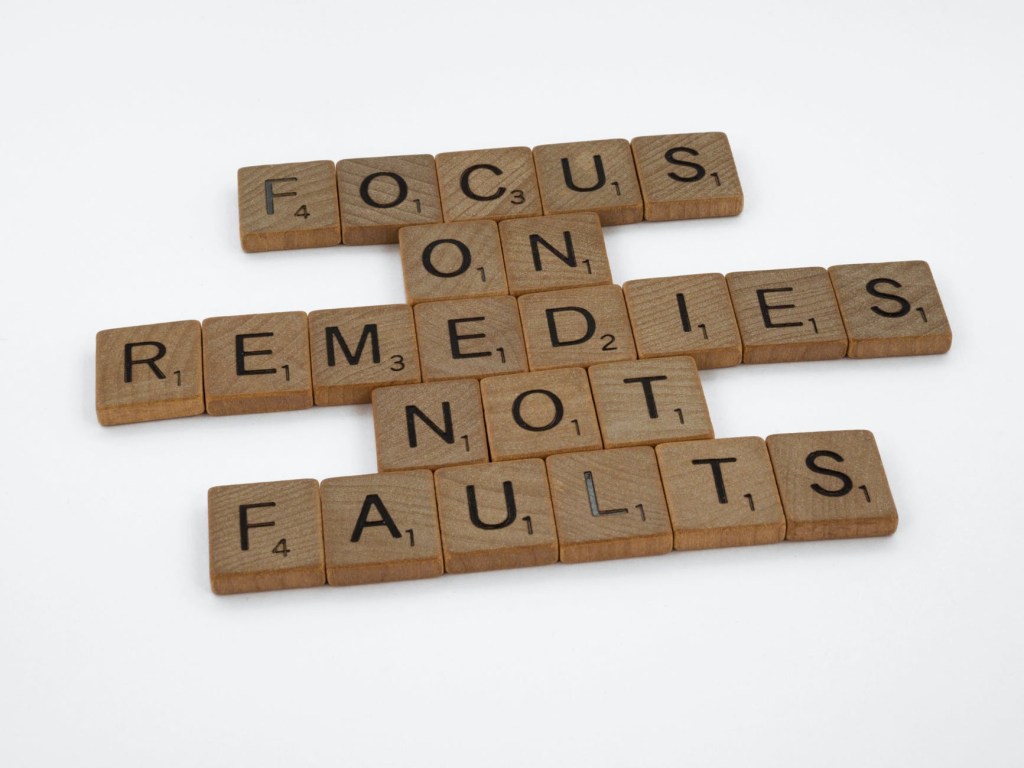
I have a friend who has been struggling with accepting responsibility for her actions lately. She has lost several jobs because she was too quick to blame others for her problems instead of taking responsibility for her own actions. This can be very frustrating, but if we want to make positive changes in our lives, we need to learn how to accept responsibility for our own mistakes and move forward from there instead of dwelling on the past or making excuses for the future.**
However, while we can all be self-deceptive, that doesn’t mean we’re all equally so. Some of us are more prone to it than others. But this is an issue that we can work on and improve if we choose to do so.
So how exactly does this work? How does refusing responsibility (or accepting it) form a habit and then become a character trait? How does our present behavior affect who we think we are and what sort of person we will become in the future?
Well, let’s imagine a scenario in which you have been involved in an accident at work and because of your actions someone has been injured badly. Refusing to accept responsibility for your actions would involve you trying to pass the blame onto someone else or even just finding ways to justify what happened. Once this pattern becomes part of your character, then when something similar happens again, you’ll find yourself again looking for someone else to blame rather than taking any ownership yourself. And by doing this consistently over time, eventually you’ll find that it becomes easier each time as well as being more tempting.
Ten reasons why we need to take responsibility in our life:
- Because it’s the only way to move forward
- Because it allows us to be in control of our own lives
- Because it makes us more resilient
- Because it gives us a sense of purpose
- Because it makes us more self-sufficient
- Because it helps us learn from our mistakes
- Because it allows us to become better people
- Because it gives us a greater sense of satisfaction
- Because it allows us to make a positive impact on the world
- Because ultimately, we are the only ones who can change our lives for the better.

 Lifereference